
Common Symptoms of Failing Forklift Batteries

Common Signs of a Failing Forklift Battery: How to Spot, Fix, and Know When to Replace
A forklift battery showing early warning signs can disrupt operations, increase costs, and pose safety risks. Recognizing symptoms of failing forklift batteries from reduced runtime and overheating to corrosion and power fluctuations, empowers maintenance teams to act before breakdowns occur. This guide defines each symptom, explains underlying causes, and outlines practical troubleshooting steps. You’ll also learn when to replace batteries, how lead-acid and lithium-ion types differ, maintenance best practices, and the cost implications of neglect. Along the way, discover how Swift Power’s expert forklift battery service and maintenance can enhance uptime and extend battery life.
What Are the Most Common Warning Signs of a Bad Forklift Battery?
Early detection of a bad forklift battery hinges on spotting clear performance and physical indicators. Identifying reduced capacity, heat build-up, sulfation, leaks, corrosion, voltage instability, and power dips enables timely intervention and prevents unplanned downtime.
Common Symptoms of Failing Forklift Batteries
- Reduced Runtime: Battery discharges faster than expected, requiring more frequent charging.
- Overheating: Cells feel unusually hot during or after charging, sometimes with steam or odor.
- Sulfation: White or grayish crystalline buildup on battery plates, leading to sluggish charging and lower output.
- Acid Leaks: Moisture, residue, or wet spots around caps and terminals, often accompanied by strong odor.
- Corrosion: Green or white powdery deposits on terminals and connectors, increasing resistance.
- Voltage Instability: Noticeable voltage drops under load or irregular charging cycles.
- Power Fluctuations: Forklift hesitates, loses power briefly, or stalls during normal operation.
Reduced runtime, overheating, sulfation, acid leaks, voltage drops, and power fluctuations are common warning signs of a failing forklift battery. These symptoms indicate underlying issues that require timely intervention to prevent breakdowns and ensure operational efficiency.
How to Recognize Reduced Runtime and Capacity Loss in Forklift Batteries
Reduced runtime occurs when a battery can no longer sustain expected operating hours. A capacity drop of 10–20 percent typically signals plate degradation or sulfation. When your forklift needs more frequent charges or stalls under light loads, the battery’s energy storage has declined. Monitoring run-time trends helps pinpoint performance loss early and leads directly into diagnosing internal plate conditions.
What Causes Forklift Batteries to Overheat and How to Spot It Early
Battery overheating stems from excessive charging voltage, low electrolyte levels, or cramped ventilation around the pack. Overheated cells feel warm to the touch and may emit faint steam or odor. Thermal stress accelerates plate corrosion and warping. Feeling surface temperature spikes during charging provides a clear sign that cooling or water level adjustments are needed to protect internal chemistry.
How Does Battery Sulfation Affect Forklift Performance?
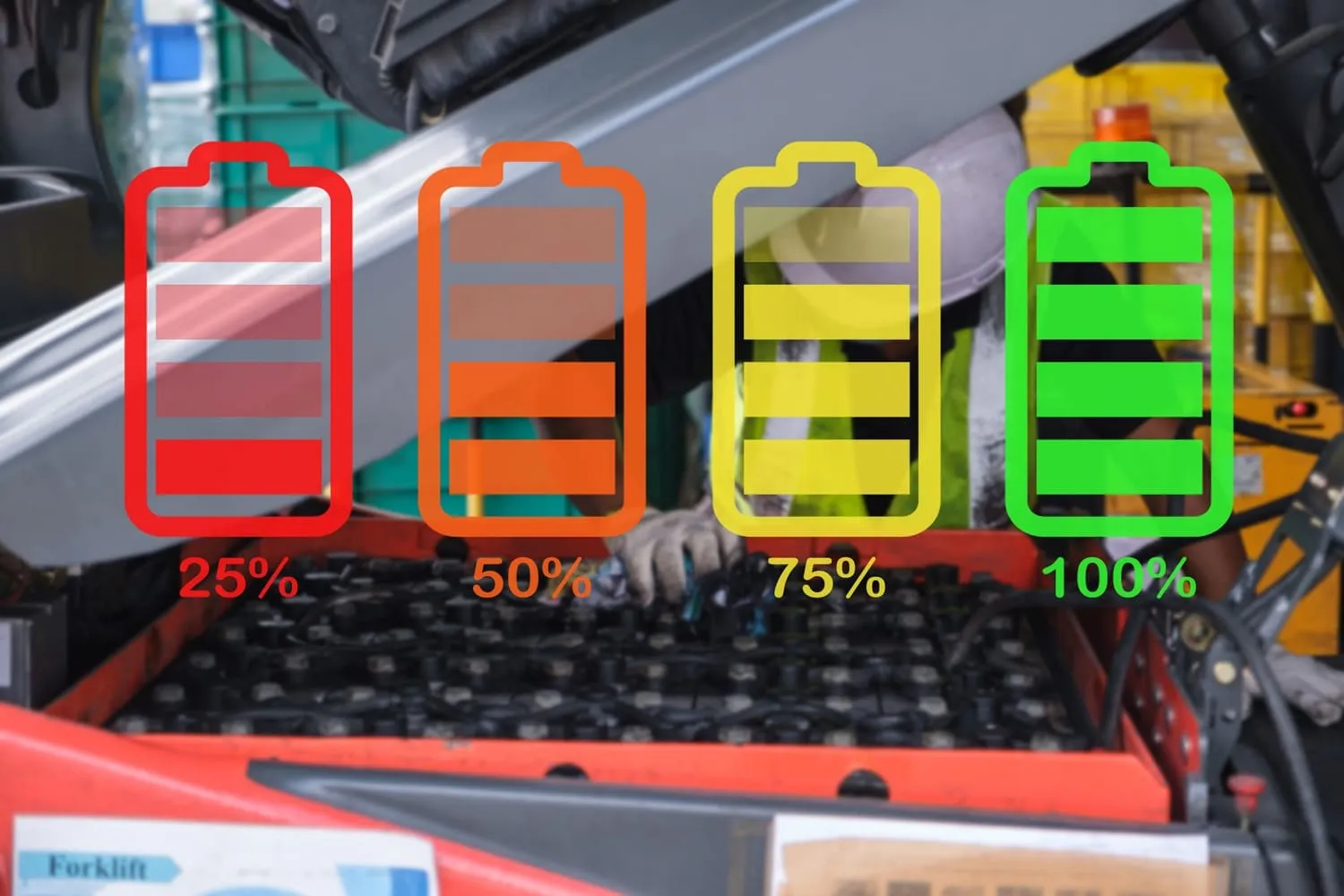
Sulfation the crystallization of lead sulfate on plates reduces active surface area and impedes chemical reactions. This buildup appears as white or grayish crusts on cell walls and leads to slow charging, diminished energy output, and shorter run cycles. A sulfated battery often shows both reduced capacity and elevated temperature during recharge, indicating that desulfation or equalization is required before performance can improve.
Battery Sulfation and Its Effects
Sulfation, the buildup of lead sulfate crystals on battery plates, is a primary cause of early battery failure in lead-acid batteries. This buildup reduces the active surface area, impeding chemical reactions and leading to reduced capacity and performance.
What Are the Signs of Acid Leaks and Corrosion on Forklift Batteries?
Acid leaks manifest as wet or crusted residue around cell caps and terminal posts. Corrosion appears as powdery green or white deposits that increase electrical resistance. When connectors show pitting or buildup, voltage delivery suffers and charging efficiency drops. Regular visual inspections reveal leaks early and allow for neutralization, cleaning, or terminal replacement to restore connectivity.
How to Detect Voltage Drops and Power Fluctuations in Forklift Batteries
Voltage drops and intermittent power delivery occur when internal cell damage or loose connections weaken the circuit. A reliable way to detect this issue is by measuring terminal voltage with a multimeter under no-load and load conditions. If voltage falls more than 10 percent under load or fluctuates during operation, the battery requires detailed electrical troubleshooting before damage spreads.
How Can You Troubleshoot Common Forklift Battery Problems Effectively?
Effective troubleshooting combines systematic diagnostics with targeted corrective actions. By following structured steps for each symptom, maintenance teams can restore battery health or determine when replacement is necessary.
What Are the Step-by-Step Diagnostics for Reduced Battery Runtime?
- Fully charge the battery using manufacturer-approved voltage.
- Perform a discharge test under a standard load and record run time.
- Compare results to original specifications.
- Measure specific gravity in each cell with a hydrometer.
A precise discharge test reveals whether runtime issues stem from capacity loss or other factors.
How to Test and Address Overheating Issues in Forklift Batteries
- Measure surface temperature during a standard charge cycle.
- Check electrolyte levels and top up with distilled water if low.
- Verify charger voltage settings against battery specifications.
- Ensure cooling vents around the battery compartment remain unobstructed.
What Are the Best Methods to Identify and Treat Battery Sulfation?
- Measure specific gravity variation across cells.
- Apply a controlled equalization charge at higher voltage for two to four hours.
- Use desulfation devices or pulse-charge units as recommended.
- Retest capacity and runtime after treatment.
Targeted equalization and desulfation restore active plate surface and improve energy retention.
How to Inspect and Repair Acid Leaks and Corroded Terminals
- Wear protective equipment and neutralize spilled acid with baking soda.
- Remove and clean terminal covers and posts using a wire brush.
- Rinse with water, dry components, and apply anti-corrosion lubricant.
- Tighten connectors to manufacturer torque values.
- Replace damaged caps or cables if necessary.
Proper cleaning and terminal repair prevent resistance buildup and ensure reliable voltage delivery.
How to Diagnose Voltage Drops and Power Instability in Forklift Batteries
- Secure battery at full charge and record open-circuit voltage.
- Apply a moderate discharge load and monitor voltage drop.
- Inspect internal cell connectors for damage.
- Replace weak cells or cables to stabilize output.
This electrical troubleshooting sequence isolates faulty components and restores consistent power flow.
Common Battery Issues and Forklift Battery Troubleshooting
Forklift operators often encounter battery issues that can disrupt operations and reduce productivity. Common problems include reduced runtime, overheating, sulfation, acid leaks, corrosion, and voltage fluctuations. Recognizing these early signs of forklift battery failure allows maintenance teams to intervene before a minor issue becomes a major downtime event.
Effective forklift battery troubleshooting begins with systematic checks such as inspecting terminals and cables, measuring voltage and specific gravity, and monitoring runtime trends. Addressing battery issues promptly through equalization charging, cleaning, or cell replacement helps maintain consistent performance and extends the battery’s service life.
What Are the Critical Symptoms Indicating Battery Replacement Is Needed?
A battery requires replacement when it exhibits:
- Runtime below 50 percent of original capacity
- Persistent overheating despite maintenance
- Severe plate warping or irreversible sulfation
- Cracked case or repeated acid leaks
- Voltage collapse under minimal load
These indicators mean the battery can no longer reliably support forklift operations and must be replaced to avoid failures.
How Does Battery Age and Cycle Life Affect Replacement Timing?
Forklift batteries typically last five years under normal usage. As cycle count and calendar age increase, capacity reduction accelerates and internal resistance rises. Tracking cycle logs alongside runtime performance helps determine the optimal replacement window before critical performance degradation.
How Do Slow Charging and Fast Discharge Signal Battery Failure?
When a fully discharged battery takes significantly longer than eight hours to recharge or loses 30–40 percent of charge within minutes, internal resistance has increased. This imbalance between charge acceptance and discharge rate points to irreversible plate damage and signals that replacement will be more cost-effective than repeated repairs.
What Safety Risks Arise from Delaying Forklift Battery Replacement?
Delaying battery replacement exposes workplaces to acid spills, thermal runaway, and electrical arcing. These hazards threaten equipment, inventory, and operator safety. Timely battery swaps support compliance with OSHA and industry standards while preventing costly accidents and downtime.
OSHA Regulations for Forklift Battery Safety
OSHA mandates specific safety protocols for forklift battery charging and maintenance areas, including designated charging zones, proper ventilation, and the use of personal protective equipment. These regulations aim to prevent accidents and ensure worker safety.
Replacing a battery based on quantifiable indicators ensures operational continuity and upholds safety standards.
Why Forklift Batteries Are Considered Industrial Batteries?
Forklift batteries are a type of industrial battery, engineered to deliver reliable, long-lasting power for heavy-duty equipment in warehouses, factories, and distribution centers. Unlike standard automotive batteries, an industrial battery must withstand repeated deep discharges, high current loads, and continuous operation over long periods.
Both lead-acid and lithium-ion forklift batteries fall under the industrial battery category, and understanding this helps operators prioritize proper maintenance. Regular charging, water-level checks, and timely servicing ensure the industrial battery performs safely and efficiently while maximizing lifespan.
What Are the Differences in Symptoms Between Lead-Acid and Lithium-Ion Forklift Batteries?
Lead-acid and lithium-ion chemistries exhibit distinct failure signs due to their internal mechanisms. Understanding these differences streamlines diagnostics and maintenance.
Lead-acid cells lose capacity through sulfation and stratification, while lithium-ion packs often signal imbalance via onboard electronics. Each chemistry demands tailored monitoring.
What Troubleshooting Steps Are Unique to Lithium-Ion Forklift Batteries?
Lithium-ion troubleshooting involves:
- Checking BMS error logs for imbalance or temperature alerts.
- Verifying cell voltages with a diagnostics tool.
- Ensuring firmware and charger compatibility.
- Performing balancing charges through the BMS interface.
These steps differ from lead-acid procedures by leveraging electronic management rather than manual equalization.
How Does Maintenance Impact Symptom Development in Different Battery Types?
Proper watering and equalization prevent sulfation in lead-acid batteries, while regular BMS firmware updates and temperature monitoring extend lithium-ion cycle life. Each maintenance regimen directly influences symptom onset and severity, reinforcing the need for chemistry-specific care protocols.
How Can Proper Forklift Battery Maintenance Prevent Common Symptoms of Failure?
Routine forklift maintenance preserves battery health, prevents common symptoms, and prolongs service life. Implementing daily, weekly, and professional checkups keeps your fleet running smoothly. These daily and weekly checks apply to all types of industrial batteries, from forklift lead-acid packs to lithium-ion systems.
What Are the Best Practices for Daily and Weekly Battery Maintenance?
Daily and weekly routines should include:
- Checking and topping up electrolyte levels with distilled water.
- Cleaning terminals and cable assemblies.
- Inspecting for leaks, cracks, or swelling.
- Recording charge/discharge cycles and temperature logs.
These simple tasks support consistent performance and feed into predictive forklift maintenance programs.
How Does Regular Water Level Checking Prevent Overheating and Sulfation?
Maintaining proper electrolyte depth keeps battery plates fully submerged, which dissipates heat during charging and reduces sulfate crystal formation. Consistent water top-offs every seven days under heavy use enhance cell longevity and performance stability.
What Role Does Equalization Charging Play in Extending Battery Life?
Equalization charging applies a controlled higher voltage to balance cell voltages and dissolve sulfate deposits. Performing equalization once a month prevents capacity drift and restores lost amp-hour potential, thereby enhancing runtime and reducing thermal stress.
How Can Professional Battery Service Help Detect and Fix Early Symptoms?
Swift Power’s expert forklift battery service and maintenance offers comprehensive diagnostics, cleaning, watering, and equalization. Through advanced testing equipment and specialized treatments, Swift Power teams detect early signs of sulfation, corrosion, and imbalance addressing issues before they become costly failures.
What Are the Financial and Operational Costs of Ignoring Forklift Battery Symptoms?
Neglecting early warning signs of a failing forklift battery can have serious financial and operational consequences. Unaddressed issues often lead to costly emergency repairs, shortened battery lifespan, and frequent unplanned downtime, all of which erode asset value. Repeated failures may also increase labor costs as operators and maintenance staff spend more time troubleshooting preventable problems.
Productivity suffers when forklifts are sidelined, delaying shipments, slowing warehouse operations, and impacting overall efficiency. By quantifying these costs, businesses can see the clear advantage of proactive maintenance, regular inspections, and timely battery replacement, which not only reduces expenses but also ensures consistent workflow and maximizes return on investment.
How Does Battery Failure Lead to Increased Downtime and Repair Expenses?
When batteries fail unexpectedly, forklifts can be out of service for hours or even days while awaiting repairs or replacements. This unplanned downtime disrupts warehouse operations, slows production, and delays shipments. Lost labor productivity adds up as operators and maintenance staff are reassigned or left idle during battery issues.
Emergency part replacements and expedited service calls are typically more expensive than scheduled maintenance, significantly increasing operational costs. Repeated failures can also shorten overall equipment life and reduce the return on investment. Understanding these impacts highlights the importance of regular battery inspections, preventive maintenance, and timely troubleshooting to keep forklifts running efficiently and budgets under control.
What Are the Long-Term Costs of Premature Battery Replacement?
Replacing forklift batteries before they reach the end of their useful life can have significant long-term financial consequences. Premature replacement wastes capital investment and increases the total cost of ownership for your fleet. Frequent early replacements also mean higher disposal costs and additional labor for installation, further driving up expenses.
By contrast, extending battery service life through proper maintenance, regular inspections, and timely troubleshooting can save 20–30 percent on battery procurement costs over the lifespan of a fleet. Proactive care not only maximizes the return on each battery but also ensures consistent forklift performance, reduces operational disruptions, and minimizes the environmental impact of disposing of functional batteries prematurely.
How Can Preventative Maintenance Reduce Overall Forklift Battery Costs?
Investing in preventative maintenance delivers clear financial returns by cutting emergency costs, optimizing asset use, and ensuring safe operations.
Frequently Asked Questions
Operators commonly seek to understand battery health signals and best practices for maintenance. Their core concerns revolve around recognizing failure signs, preventing premature degradation, and performing effective diagnostics.
How Do I Know If My Forklift Battery Is Bad?
Indicators include sharply reduced runtime, difficulty achieving full charge, elevated surface temperatures, visible corrosion or leaks, and dramatic voltage drops under load. Consistent tracking of these signs enables accurate health assessments.
What Causes Forklift Batteries to Fail Prematurely?
Premature failures often result from under-watering, overdue equalization, irregular charging schedules, extreme temperatures, and poor ventilation. Addressing these factors through routine care prevents early capacity loss.
How Often Should Forklift Batteries Be Replaced?
Replacement schedules depend on cycle counts and performance benchmarks. Most lead-acid batteries reach end-of-life around 1,500 cycles, while lithium-ion packs often deliver 2,000+ cycles under proper management. Monitoring capacity trends informs timely swaps.
How Do I Troubleshoot a Forklift Battery That Won’t Hold a Charge?
Begin by verifying charger output, inspecting electrolyte levels, checking for sulfation, and measuring internal resistance. If basic maintenance doesn’t restore hold time, perform a deeper cell check or consult professional service.
Can I Repair a Sulfated or Overheated Forklift Battery?
Mild sulfation can often be corrected with equalization charging or the use of pulse desulfators. In more advanced cases, individual cell replacement may be necessary. Overheated batteries, however, usually suffer permanent plate damage and should always be inspected by a qualified technician to determine if repair is possible.
Conclusion
Recognizing the signs of a failing industrial battery, especially forklift units is crucial for maintaining operational efficiency and safety. By understanding symptoms like reduced runtime, overheating, and sulfation, you can take proactive measures to extend battery life and minimize downtime. Implementing regular maintenance and timely replacements not only enhances productivity but also safeguards your investment. Explore our expert services to ensure your forklift batteries remain in optimal condition.
Servicing Tennessee, Florida, and Alabama