

Affordable Commercial Generators That Save You Money

Affordable Commercial Generators That Cut Costs: Practical Power Solutions for Businesses
Choosing the right commercial generator helps keep your facility running during outages. You may need a generator for a small business or a larger industrial system. The right choice also helps control long-term costs. This guide explains what makes a generator cost-effective for different types of businesses and how factors like sizing, fuel type, and routine maintenance shape overall spending.
It also outlines the main cost drivers behind equipment selection, what to look for in fuel efficiency. Understanding fuel efficiency for generators can save money over time. Common elements such as standby units, diesel and natural gas models, automatic transfer switches, remote monitoring, and UPS support are included so you can compare options and decide what fits your needs and budget. A Generac standby generator is a reliable option for many businesses.
What Are the Key Factors Affecting Commercial Generator Prices?
Commercial generator pricing reflects several linked variables that shape purchase cost, installation complexity, and long-term operating expense. Size and rated power (kW/kVA) set the base price because larger engines and alternators need heavier-duty components and controls. Fuel type and required fuel infrastructure change, installation scope and emissions equipment. Enclosure choices sound attenuation, weatherproofing and advanced control systems add to upfront cost but can reduce operational disruption. Warranty and service packages also affect the initial investment and expected lifecycle expense. Knowing these factors helps buyers specify the features they need without paying for unnecessary premium items that raise both purchase price and TCO.
Below are the five highest-impact price factors and why they matter.
- Size and power rating: Higher kW/kVA capacities increase engine, alternator, and structural costs.
- Fuel type and supply infrastructure: Different fuels need different handling, storage, or piping, which changes installation cost.
- Enclosure and sound attenuation: Weatherproof, sound-attenuated housings add material and engineering expense.
- Controls, ATS, and extras: Automatic Transfer Switches and advanced controls raise both price and operational capability.
- Installation and site work: Foundation, electrical integration, permitting, and fuel-system work can rival equipment cost.
These factors interact; opting for a premium enclosure or control package often implies higher warranty expectations and service requirements.
The next section explains how size and output specifically affect purchase and operating costs.
How Does Generator Size and Power Output Influence Cost?
Generator size links directly to both purchase price and fuel consumption because higher-capacity engines use larger components and run on different efficiency curves. A properly sized unit operates nearer its optimal load range. Generators are typically most fuel-efficient at moderate continuous loads so matching your essential load to generator capacity reduces fuel cost per kWh and avoids paying for unused capacity. Oversizing carries two penalties: greater capital expense and poorer fuel efficiency when loads are a small fraction of rated capacity. Undersizing risks overloads, accelerated wear from frequent high-load operation, and downtime that reduces ROI.
To help buyers orient decisions, this brief table maps common size classes to typical prices and fuel types.
List your essential loads and motor starting demands. Add some growth for the future. This helps pick a size that balances cost and efficiency. It is especially important for a generator for a small business, where space and budget are limited.
The next subsection compares fuel types and their impact on lifecycle expenses.
Which Fuel Types Offer the Best Value for Commercial Generators?
Fuel choice affects operating costs, emissions, and logistics. Even a generator for a small business must match local fuel availability and duty cycle. Diesel gensets are common for heavy-duty and long-run applications because of their energy density and field-proven reliability. Choosing the best industrial generators ensures strong performance and durability. They are a good choice for a generator for industrial use. Natural gas systems remove the need for bulk fuel storage where a pipeline exists, but depend on local availability and pricing. Propane and dual-fuel setups add resilience by allowing fallback options when a primary fuel is disrupted, trading some energy density for flexibility.
Choose fuel by comparing local pricing, delivery reliability, emissions rules, and expected duty cycle so equipment choices align with long-term operational costs.
Life Cycle Cost Analysis of Diesel/Photovoltaic Hybrid Power Systems
This 2013 study examines hybrid PV/diesel systems in remote areas and shows how diesel price volatility affects long-term economics. Using NREL’s HOMER software, the analysis models PV penetration and battery storage to quantify changes in energy production, cost of energy, diesel run hours, and percentage fuel savings—highlighting when hybrid configurations reduce fuel use and emissions.
Life cycle cost analysis of a diesel/photovoltaic hybrid power generating system, OG Ekwueme, 2013
How Can You Choose Fuel-Efficient Commercial Generators to Maximize Savings?
Selecting a fuel-efficient generator starts with matching your facility’s load profile to equipment that runs near its optimal efficiency point, and choosing features that reduce wasted fuel. Prioritize units with verified efficiency curves for your duty cycle, intelligent engine controls for load-following, and remote monitoring to minimize unnecessary idling. Hybrid setups and UPS integration can cut fuel use during short outages; predictive maintenance reduces inefficiencies caused by declining engine health. Compare diesel, natural gas, and propane on a multi-year TCO basis, not only on per-unit fuel price.
Before you buy, run this checklist:
- Inventory typical and peak loads to define your duty cycle.
- Review the generator’s fuel consumption curve and expected load factor.
- Consider remote monitoring and engine controls that minimize idle time and unnecessary warm-up.
These steps help you choose a generator and control package that reduces fuel spend while preserving required reliability.
The next two subsections compare diesel versus natural gas and outline propane/dual-fuel trade-offs.
What Are the Benefits of Diesel vs. Natural Gas Generators for Businesses?
Diesel generators deliver strong torque and efficient fuel use under heavy loads, making them a go-to for industrial and prime-power settings where runtime and resilience matter. Advantages include widespread availability, robust cold-start capability (with proper system design), and well-understood maintenance routines. Natural gas systems cut onsite fuel logistics and often lower emissions when a reliable pipeline exists, though they depend on a steady gas supply and may have different permitting requirements. Maintenance needs differ: diesel requires fuel-system care, while gas-fired engines depend on clean pipeline delivery and control tuning for pressure variability. The right choice depends on site infrastructure, emissions rules, runtime expectations, and local fuel economics.
Picking fuel early in the specification process avoids costly retrofits for sizing or enclosure design later.
How Do Propane and Dual-Fuel Generators Help Reduce Operating Expenses?
Propane and dual-fuel systems boost operational resilience by letting you switch fuels when one source is constrained, useful for remote or seasonal sites without piped gas. Propane stores well and burns cleanly, though its lower energy density increases fuel volume for equal kW output. Dual-fuel systems can switch automatically or manually, maintaining continuity during supply disruptions and letting you run the least-expensive fuel when available. These systems may raise initial cost and complexity, but the reduced downtime risk and supply-chain exposure often justify the investment for critical loads.
Evaluating these trade-offs shows whether the extra capital for fuel flexibility reduces TCO through lower outage risk and simpler logistics.
How Do You Size and Select the Right Commercial Generator for Your Business?
Sizing starts with a detailed inventory of essential loads, then factors in starting currents, diversity factors, and a growth allowance to avoid unnecessary oversizing. Identify which loads must run during outages, separate continuous from intermittent demands, and quantify motor starting peaks. Apply appropriate diversity and growth margins so the genset and alternator meet steady-state and short-duration peaks without overspecifying a prime mover that wastes fuel.
Use this step-by-step checklist to guide sizing decisions.
- List all essential equipment with nameplate kW/kVA ratings and mark continuous or intermittent loads.
- Identify motor starting loads and apply typical starting multipliers to estimate inrush.
- Apply diversity and simultaneous-use factors rather than summing all nameplate values.
- Add a reasonable growth margin for planned expansion.
- Select a generator and alternator sized for peak short-term loads and efficient continuous operation.
Following these steps yields a defensible sizing choice that balances cost and reliability and avoids the common mistake of oversizing.
The next subsection details calculation inputs and methodology.
How to Calculate Your Business’s Power Needs Accurately?
Accurate load calculation consolidates nameplate ratings, converts single-phase loads to three-phase equivalents where needed, and separates kW from kVA when power factor matters. Start with a full inventory of critical systems, lighting, HVAC, control systems, conveyors, and servers and flag continuous versus occasional loads. For motor-driven equipment, include locked-rotor or starting current multipliers to capture transient peaks. Sum adjusted loads using diversity factors to prevent overly conservative totals, then compare the required standby kW/kVA to available genset ratings while checking alternator capability for short-duration peaks.
This calculation method produces a targeted generator selection that minimizes overspecification and the risk of overload during outages.
What Are Industry-Specific Generator Sizing Guidelines?
Industry needs drive sizing priorities: warehouses and material-handling centers face large motor starts and require gensets or ATS strategies that handle high inrush; telecom sites and remote shelters prioritize compact, fuel-stable systems with long unattended runtimes; data centers emphasize redundancy architectures (N+1) and fast transfer to protect sensitive IT loads. Utilities and cable operations need weatherized enclosures, secure fuel plans, and modular scaling for varied tasks. Applying industry-specific rules of thumb, motor-start allowances for material handling, runtime fuel models for telecom, and redundancy margins for data centers leads to practical procurement choices.
With industry requirements defined, specifications can include the right environmental protections, controls, and access for long-term, cost-effective operation.
What Maintenance Practices Save Money on Commercial Generators Long-Term?
Preventive maintenance turns generator ownership into a predictable, manageable asset. Performing preventive generator maintenance regularly reduces failures and keeps the system reliable. Core tasks include scheduled oil and filter changes, coolant inspections, battery testing and replacement, periodic load-bank testing to prevent wet-stacking, and exercising controls and the ATS under load. Remote monitoring and predictive analytics spot issues early fuel contamination, rising coolant temps, or battery decline, so you can fix problems before they become emergencies. Planned service programs let operators budget for parts and labor and avoid the premium of expedited emergency repairs.
- Scheduled inspections and fluid replacements at manufacturer-recommended intervals.
- Regular battery maintenance and temperature-conditioned storage, where applicable.
- Load-bank testing to exercise engines and prevent combustion problems.
- Fuel polishing and filtration programs to avoid contamination-related failures.
A disciplined maintenance program reduces unexpected downtime and evens out expenses; the next subsection explains why emergency repairs often cost more.
How Does Preventive Maintenance Lower Generator Operating Costs?
Preventive maintenance lowers operating costs by catching small issues before they become major repairs, preserving fuel efficiency, and avoiding collateral damage from failures. Routine oil and filter changes reduce accelerated wear on the engine and alternator, while scheduled load tests confirm the generator and ATS work under realistic conditions so protections respond correctly during an outage. Predictive tools reveal trends of battery weakness, fuel-water separation, and falling compression, so parts are replaced during planned windows rather than costly emergency calls. These practices extend equipment life and cut the frequency and severity of unplanned downtime.
Linking maintenance frequency to your business’s risk tolerance helps optimize service scope to minimize lifecycle cost while keeping required reliability.
When Is Emergency Repair More Costly Than Proactive Service?
Emergency repairs increase cost through premium labor rates, expedited parts shipping, and the revenue or productivity losses tied to downtime, especially at critical sites like data centers and distribution hubs. In a major outage, lost production, SLA penalties, and recovery costs can exceed the price difference between scheduled service and an emergency response. Service contracts with defined response times, standby parts, and condition-based servicing lower the chance of emergencies. Investing in planned maintenance and access to local service resources usually results in lower total expense than reacting to failures, especially where minutes offline have a measurable business impact.
- For facilities needing installation and expert maintenance, Swift Industrial Power Inc.’s Reserve Power Division offers tailored services, including installation, maintenance, and repair for commercial generators and reserve power equipment.
- Swift Industrial Power’s approach emphasizes protecting critical power through scheduled service plans and condition monitoring that integrate with existing UPS and DC systems.
- Organizations can request a consultation or quote to align maintenance frequency with operational risk, ensuring service spend reduces downtime exposure without unnecessary costs.
IoT-Enabled Predictive Maintenance for Diesel Generators: An Industry 4.0 Case Study
This 2024 case study demonstrates IoT-enabled remote monitoring for diesel generators and how predictive maintenance improves reliability. It shows a framework using a 4G-enabled node to track engine speed, voltage and current, power factor, coolant, fuel, and battery health, and uses analytic methods (AHP) to prioritize which real-time parameters matter most for efficient monitoring.
IoT-enabled predictive maintenance and analytic hierarchy process based prioritization of real-time parameters in a diesel generator: AG Mohapatra, 2024
Which Industry-Specific Affordable Power Solutions Can Reduce Your Business Costs?
Affordable power approaches differ by industry but share the same goals: right-size capacity, pick the right fuel and controls, and choose modular or staged options that lower initial capital while allowing future growth. Material handling operations often choose gensets sized for high motor-start profiles and add ATS strategies with soft-start controls to smooth loads. Telecom and edge data sites favor compact, fuel-stable gensets paired with UPS systems and remote monitoring. Utilities and cable operators specify weatherized enclosures, secure fuel logistics, and modular replacement planning. Affordable tactics include rentals, staged upgrades, modular gensets that scale with demand, and pairing smaller generators with intelligent load management to avoid overpaying for a single large unit.
Below are cost-effective configuration strategies by industry.
- Material handling: right-size for motor starts and add load-management controls to limit peak fuel use.
- Telecommunications: compact, fuel-stable gensets with UPS integration for clean switchover and remote monitoring.
- Data centers: modular and N+1 architectures that reduce upfront capital and enable staged investment.
- Utility/cable: weatherized enclosures, secure fuel logistics, and modular replacement planning.
After selecting a configuration, ensure installation and service plans match your risk tolerance and budget.
How Do Generators Improve Efficiency in Material Handling Operations?
In material handling and warehousing, reliable backup power prevents production stoppages and protects automated controls, conveyors, and sortation equipment, reducing both direct lost throughput and indirect inventory delays. Generators sized to manage motor starting currents, coupled with soft-start or active load management, prevent large inrush events from tripping protections and causing cascading outages. Right-sized units also lower fuel consumption during normal cycles and avoid the capital cost of oversized systems that rarely run efficiently. Regular load testing and maintenance in operational plans preserve uptime and ensure backup systems work when needed.
Those choices yield predictable operations and measurable reductions in outage-related costs.
What Are Cost-Effective Backup Power Options for Telecommunications and Data Centers?
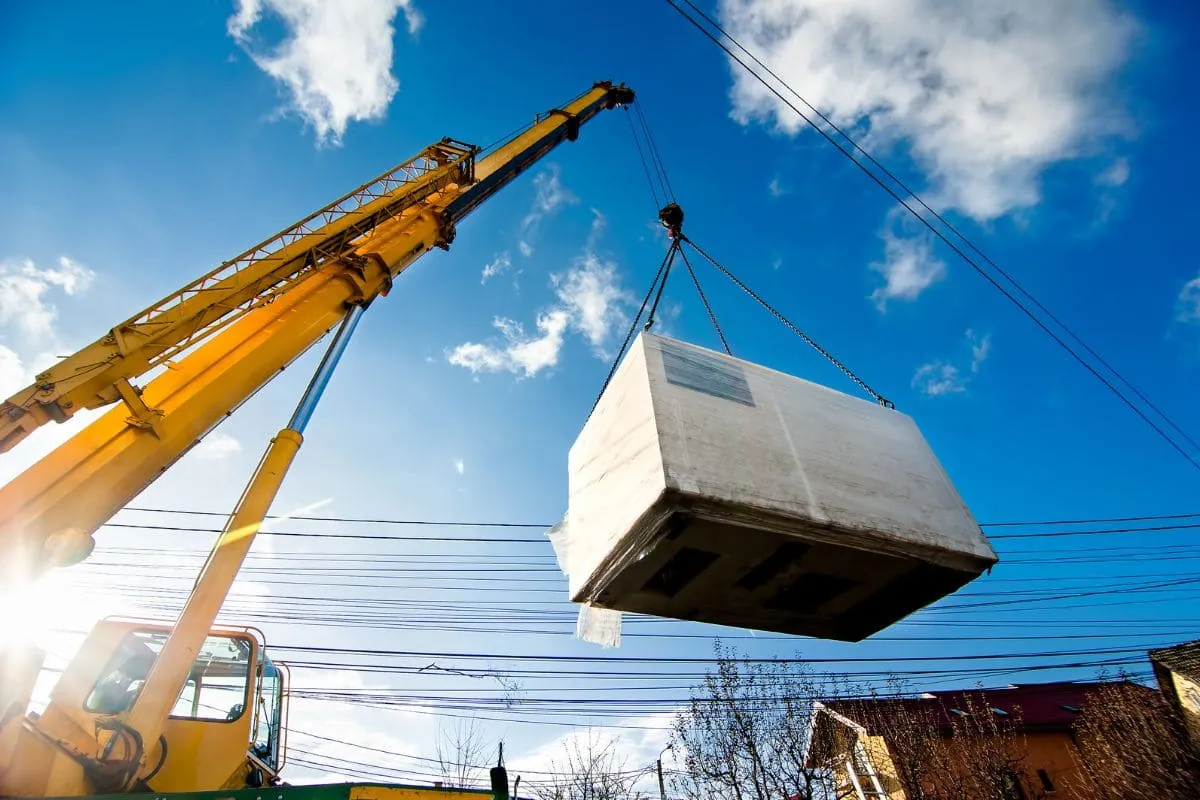
Telecom and data center sites benefit from hybrid backup architectures that pair UPS systems for instant ride-through with generators for extended outages. These are proven backup power solutions for critical operations, balancing capital and operating expenses while meeting tight recovery objectives. Modular gensets let you grow capacity incrementally as demand rises, lowering initial capital outlay. For many sites, Generac Power Systems provides dependable and flexible backup power. For small or edge data centers, compact diesel or natural gas units with rapid-start controls and ATS integration deliver reliable runtimes without oversizing. Careful fuel logistics, on-site storage where needed, ATS performance, and remote monitoring ensure continuity for remote telecom sites and efficient fuel use in data center environments.
Swift Industrial Power Inc.’s Reserve Power Division provides tailored power system solutions for material handling, telecommunications, utility, cable, and data center facilities, aligning equipment selection, installation, and maintenance with operational budgets and reliability needs.
How Can Businesses Calculate the Total Cost of Ownership for Commercial Generators?
Calculating TCO means adding purchase, installation, fuel, maintenance, repairs, downtime, disposal, and financing costs instead of focusing only on sticker price. A practical TCO framework separates fixed upfront costs (equipment, enclosure, ATS, site prep) from recurring operational costs (fuel, scheduled maintenance, parts, repairs) and intangible but real costs like downtime exposure and regulatory compliance. Modeling fuel-price scenarios, expected runtime hours, and maintenance schedules over multiple years shows whether a lower upfront price creates higher lifecycle expense. Transparent TCO analysis also highlights when investments in remote monitoring, extended warranties, or hybrid integration pay back through avoided downtime or lower maintenance needs.
Use this framework to model low, medium, and high runtime scenarios so you can compare options on an annualized basis rather than by purchase price alone.
The next subsection lists hidden costs buyers commonly overlook.
What Hidden Costs Should You Consider Beyond the Initial Purchase Price?
Hidden costs often appear in site prep, fuel infrastructure, permitting, and integration with existing electrical systems and they can substantially change the economics if not accounted for. Site work, like concrete pads, sound walls, and electrical conduit, can add material and labor that approach equipment cost in complex installs. Permitting and emissions compliance may require extra control or filtration equipment. Fuel infrastructure tanks, piping, spill containment, and secondary containment for diesel add capital and recurring inspection obligations. Shipping, rigging, transit insurance, and end-of-life disposal are additional items to include in a complete budget.
Accounting for these costs early prevents budget overruns and enables apples-to-apples comparisons among supplier proposals.
How Does Reliable Backup Power Provide ROI by Preventing Downtime?
Reliable backup power produces ROI by protecting revenue, preserving customer trust, and avoiding SLA penalties that accumulate quickly when critical operations stop. To estimate downtime cost per hour, sum lost production value, labor inefficiencies, contractual penalties, and remediation expenses; that figure gives an operationally grounded value for avoided outages. Multiply by expected outage frequency and duration under different reliability scenarios to justify investments in higher-reliability equipment, redundancy, or prioritized service contracts. Framing resilience as protection for top-line revenue and brand reputation not just an expense, helps make the business case.
- As an example of process alignment (not a performance claim), Swift Industrial Power Inc. applies a sizing-and-service approach that evaluates essential load lists, integrates preventive maintenance schedules, and recommends controls and monitoring features to reduce outage risk. This consultative process shows how careful specification and planned servicing align generator selection with a business’s TCO goals without relying on fabricated metrics.
Modeling TCO with realistic downtime assumptions and maintenance plans produces a defensible procurement decision that balances capital and operational spending.
Frequently Asked Questions
What is the average lifespan of a commercial generator?
Commercial generator lifespan typically ranges from 8,000 to 20,000 operating hours for diesel and 6,000 to 15,000 hours for natural gas units, depending on duty cycle and maintenance. Standby generators often last many years because they run only during outages. Actual lifespan varies with maintenance, duty cycle, and environmental conditions. Regular preventive maintenance and correct operation can significantly extend life and reliability. Fuel type and unit design also influence longevity, so factor expected hours and service history into replacement planning
How can businesses ensure compliance with emissions regulations for generators?
Start by reviewing local and federal emissions rules that apply to your site and fuel type. Choose generators with the necessary emissions controls aftertreatment, particulate filters, or catalytic systems, and schedule regular emissions testing and service. Work with environmental consultants or permitting authorities early in the specification process to avoid surprises during installation.
What are the benefits of remote monitoring for commercial generators?
Remote monitoring delivers real-time status, early fault detection, and better maintenance scheduling. IoT-enabled systems track fuel levels, temperature, battery health, and runtime so you can intervene before failures occur. This reduces unexpected downtime, optimizes fuel use, and makes maintenance more efficient, lowering TCO over time.
How do seasonal changes affect generator performance?
Seasonal extremes can impact fuel viscosity, battery capacity, and cooling performance. Cold weather can make starting harder and affect fuel flow; heat increases the risk of overheating and accelerated wear. Perform seasonal checks, battery tests, coolant and fuel quality inspections, and use weatherproof enclosures and appropriate ventilation to mitigate seasonal effects.
What are the advantages of hybrid generator systems?
Hybrid systems combine multiple energy sources (diesel plus renewables or batteries) to improve efficiency and resilience. They can reduce fuel consumption and emissions by using the most efficient source at each moment and provide flexible runtimes during outages. Hybrids are a strong fit where fuel cost volatility or emissions limits make pure-fuel solutions less attractive.
How can businesses calculate the return on investment (ROI) for a generator?
To calculate ROI, estimate the total cost of ownership (purchase, installation, maintenance, and fuel) and compare it to quantified benefits: avoided downtime costs, reduced operational expenses, and improved service levels. Include intangible value like customer trust where appropriate. Comparing multi-year TCO scenarios against expected outage exposure gives a practical ROI picture.
What should businesses consider when planning for generator installation?
Key considerations include site location, load requirements, fuel type, ventilation, and local zoning or permitting. Verify physical space, access for maintenance, and required clearances. Factor in foundation and site prep, electrical integration, and fuel infrastructure needs. Partnering with experienced installation and service providers helps ensure a smooth setup and long-term operation.
Conclusion
Investing in affordable commercial generators means more than buying the lowest-priced unit. Selecting commercial backup power generators ensures long-term reliability and efficient operation. By understanding size, fuel trade-offs, and maintenance best practices, you can make decisions that boost efficiency and reliability. Explore tailored solutions for your industry and budget, and contact our team to find the generator and service plan that secures your facility’s power future. We can help you select from the top options, including Generac generators
Servicing Tennessee, Florida, and Alabama