Essential Forklift Battery Charging Solutions for Businesses
Table Of Contents:
- Best Forklift Battery Charging Solutions for Commercial Forklifts: How to Choose and Optimize Performance
- What Are the Best Forklift Battery Chargers Available Today?
- How Can You Extend Forklift Battery Lifespan With Proper Charging Solutions?
- What Are the Benefits of Using Commercial Battery Charging Stations for Forklift Fleets?
- How Do Fast Charging Systems Work for Commercial Forklifts?
- What Are the Environmental and Cost Benefits of Modern Forklift Battery Charging Solutions?
- How Do You Choose the Right Forklift Battery Charging Solution for Your Business?
- What Are Common FAQs About Forklift Battery Charging and Maintenance?
- Table: Comparative Overview of Charging Technologies and Benefits
- Final Thoughts
- Frequently Asked Questions
Best Forklift Battery Charging Solutions for Commercial Forklifts: How to Choose and Optimize Performance
In today’s industrial landscape, ensuring the reliability and longevity of forklift batteries is critical for maintaining productivity and operational uptime. Companies across the material handling sector face the challenge of choosing the right charging solution for their forklift fleets. Differences between lithium-ion and lead-acid technologies and fast charging options add to the complexity. This guide outlines the best forklift battery charging solutions available today, explains methods to extend battery lifespan, and covers the environmental and cost benefits of modern charging systems. The aim is to equip you with the knowledge to select and optimize your charging performance, reduce downtime, and lower total cost of ownership while maintaining high safety standards.
What Are the Best Forklift Battery Chargers Available Today?
Choosing the right forklift battery charger is essential for maximizing performance and efficiency. The market offers a wide variety of charging solutions—from traditional lead-acid chargers to advanced lithium-ion models. Each type is designed to reduce energy consumption, minimize charging time, or extend battery life.
Most recommended chargers incorporate smart technology to optimize the charging cycle. Many high-end models monitor voltage drop, electrolyte levels, and temperature while dynamically adjusting charging rates. They also include built-in protection features such as circuit breakers, fuses, and overload protection to prevent hazards.
How Do Lithium-Ion Forklift Battery Chargers Compare to Lead-Acid Chargers?
Lithium-ion chargers offer some operational benefits over traditional lead-acid chargers. Their ability to support higher charge rates safely without degrading performance is a primary advantage. They use refined charging algorithms that minimize depth of discharge and prevent sulfate buildup—a common issue in lead-acid systems that can lead to premature failure.
In contrast, lead-acid chargers are better suited for cost-sensitive applications but typically require longer charge cycles and more maintenance due to issues like sulfuric acid corrosion.
What Features Should You Look for in Commercial Battery Charging Stations?
When selecting a commercial battery charging station, consider the following key features:
– Ability to handle various battery chemistries (Compatible for Lead and Lithium)
– Multiple charging bays to support simultaneous charging to reduce fleet downtime.
– Customizable charge cycles, remote monitoring capabilities, and built-in safety mechanisms such as over-voltage and short-circuit protection.
– Options for equalization and current balancing, ensuring every battery cell is charged uniformly to prevent deep discharge cycles.
Integration with digital management systems allows real-time monitoring of charging performance and instant correction of voltage drops or abnormalities. Energy-efficient designs and support for renewable energy sources, such as solar power, are also important criteria for environmentally conscious operations.
Which Fast Charging Systems Are Most Effective for Forklifts?
Fast charging systems have transformed industrial fleet operations by significantly reducing the time needed to restore battery capacity. These systems use advanced algorithms to quickly bring a battery to a safe charge level before switching to standard or trickle charging to complete the cycle. Many fast chargers achieve a full charge within a critical window of 1 to 2 hours, a vast improvement over conventional methods.
Technologies such as high-frequency pulse charging and adaptive voltage regulation minimize cell heating and prolong battery life. However, fast charging must be matched with the correct battery type; some lead-acid batteries cannot withstand rapid recharging without risk. Ensuring compatibility—such as using the correct voltage and current output and a battery designed for fast charging—is essential to reap benefits while mitigating risks like electrolyte boiling and cell degradation.
How Can You Extend Forklift Battery Lifespan With Proper Charging Solutions?
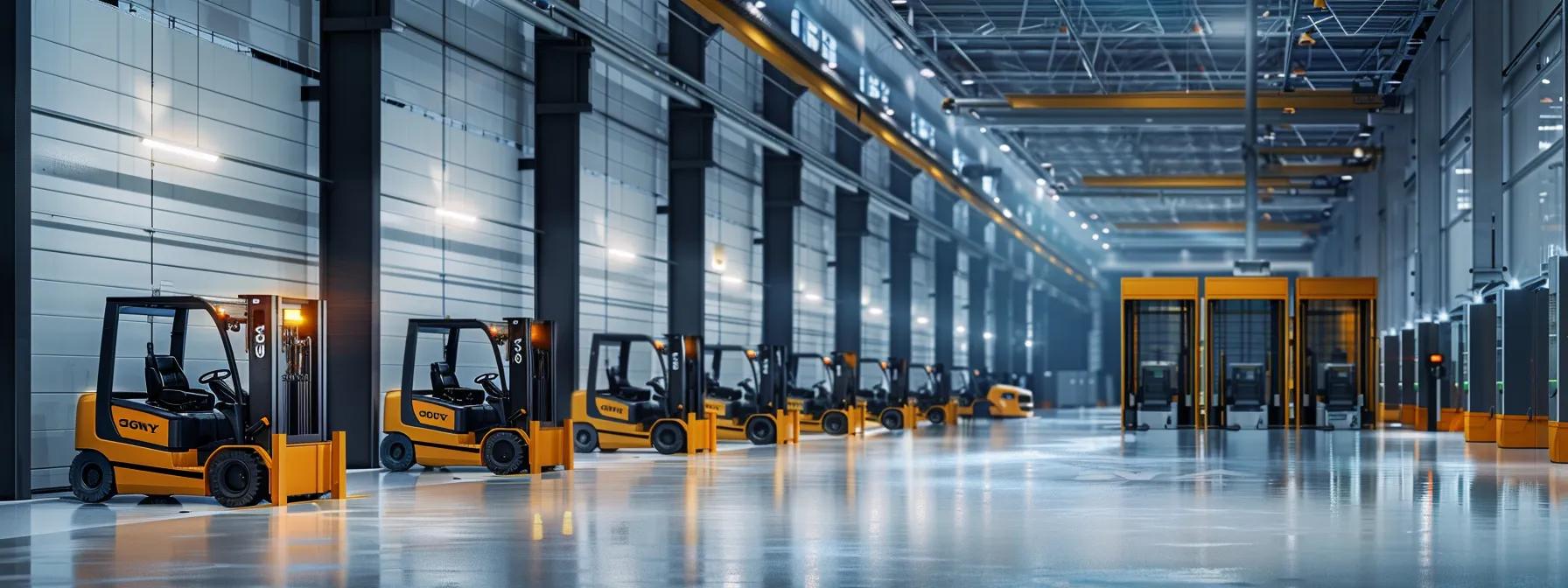
Proper charging techniques can extend forklift battery lifespan, reduce lifecycle costs, and ensure operational continuity. This process not only involves selecting the right charger but also implementing best practices in battery management and regular maintenance.
A critical first step is charging batteries before they reach critically low levels. Consistent deep discharging can cause irreversible damage and reduce overall capacity. Using chargers with battery management systems (BMS) allows for tracking depth of discharge and ensures optimal charging. These systems monitor key parameters and address potential issues before they cause damage.
Regular inspections for signs of sulfate buildup, corrosion, or electrolyte imbalance are essential. Periodic equalization charges help balance the charge across cells, particularly in lead-acid batteries. For lithium-ion batteries, chargers with temperature compensation and adaptive charge profiles help prevent cell degradation over time. Adhering to these practices not only extends battery life but also improves overall forklift availability and productivity.
What Are the Best Practices for Charging Lithium-Ion Forklift Batteries?
For lithium-ion forklift batteries, advanced charging protocols are paramount. Best practices include:
– Setting the charger to limit the charge current to minimize heat buildup while ensuring rapid efficiency.
– Employing a constant current/constant voltage (CC/CV) charging process that initially builds up the charge rapidly and then slows down as the battery nears full capacity.
– Avoiding frequent 100% charge cycles to reduce strain on battery cells; maintaining a state-of-charge between 20% and 80% significantly prolongs battery life.
– Using chargers integrated with battery management systems that monitor temperature fluctuations and automatically adjust the charging rate to prevent overcharging or overheating.
– Regular firmware updates and scheduled maintenance checks ensure optimal charging performance over the long term.
How Does Battery Management Technology Improve Battery Life?
Battery management technology (BMS) continuously monitors and optimizes charging cycles, ensuring each cell receives the optimal voltage and current. By preventing imbalances, BMS helps avoid premature cell degradation and uneven performance. Modern BMS solutions also integrate safety parameters that detect voltage drops, temperature variances, or short-circuit conditions and adjust or shut down the charging process automatically. This results in enhanced battery reliability, fewer failures, and an overall longer battery lifespan. Real-time monitoring and diagnostics further reduce downtime and drive operational efficiency.
What Are the Benefits of Using Commercial Battery Charging Stations for Forklift Fleets?
Commercial battery charging stations provide many benefits beyond basic charging:
– They are designed to handle multiple battery types and support simultaneous charging for several forklifts, significantly reducing downtime.
– Robust construction typically includes built-in safety protocols, energy-efficient power supplies, and compatibility with renewable energy sources.
– Centralized battery management simplifies maintenance, allowing operators to monitor usage, track charging cycles, and schedule preventive maintenance easily.
An additional benefit is increased safety. These stations incorporate features like circuit breakers, cooling systems, and automatic fault detection to minimize the risks associated with handling hazardous materials such as sulfuric acid in lead-acid batteries. Enhanced safety and streamlined operations contribute to higher overall productivity.
How Do Charging Stations Improve Efficiency and Reduce Downtime?
Charging stations improve efficiency by centralizing the charging process, thereby reducing wait times for battery swaps and minimizing idle time. With multiple batteries charged simultaneously, operators can keep more forklifts in service. Remote monitoring capabilities enable managers to quickly identify which batteries are fully charged and ready for use, ensuring that high-demand operations face minimal delays.
In high-demand industrial environments, reducing downtime by even a few minutes per charging cycle can have a significant impact on productivity. Rapid charge modes further decrease the overall charging duration, contributing to longer battery life and reduced maintenance costs.
What Customization Options Are Available for Different Fleet Sizes?
Modern commercial battery charging stations offer a wide range of customizations to suit diverse fleet sizes and operational needs. Smaller fleets may benefit from modular systems that allow for incremental expansion, while larger operations might require dedicated, high-capacity charging centers with advanced monitoring tools. Customization options include:
– The number of charging bays.
– Adjustable charge cycles for different battery chemistries.
– Integration with fleet management software for efficient scheduling and diagnostics.
– Scalability to tailor the system to specific energy demands.
– Remote diagnostics and maintenance alerts to ensure ongoing reliability.
These customizable systems help optimize the charging strategy for any facility, enhancing operational efficiency and reducing downtime.
How Do Fast Charging Systems Work for Commercial Forklifts?
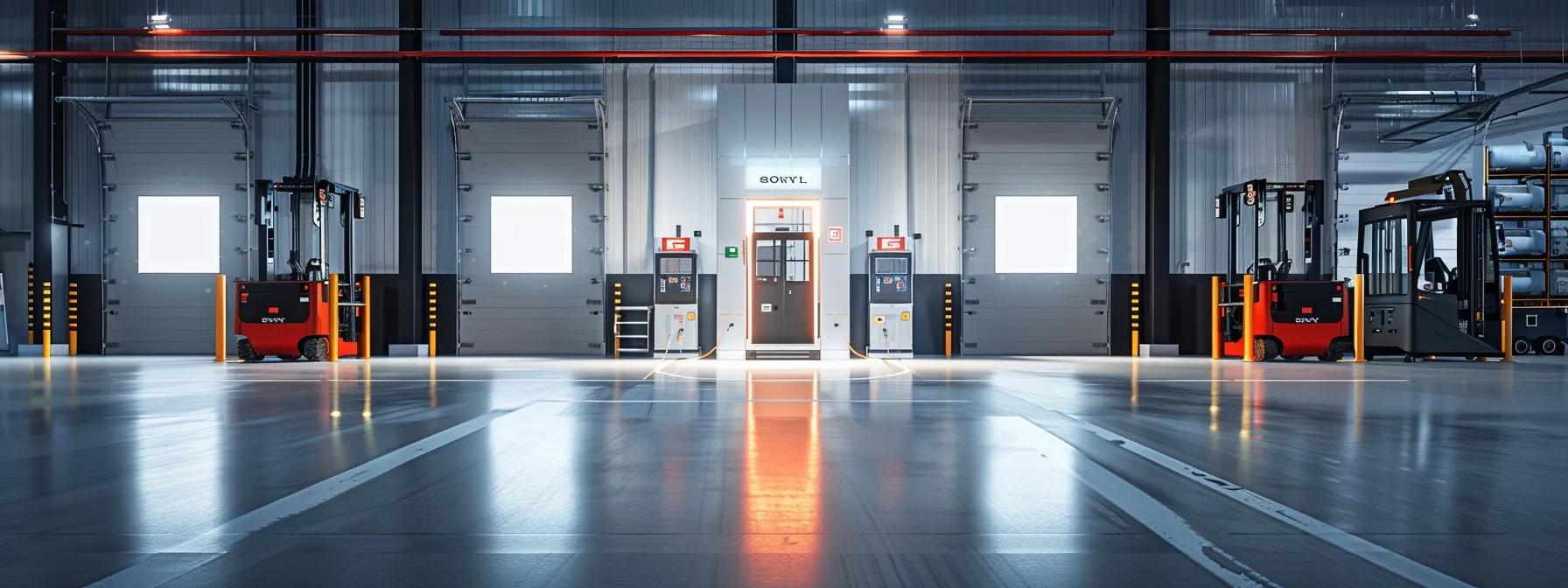
Fast charging systems for commercial forklifts are engineered to quickly restore a battery to a usable state. They begin by applying a high-current charge that is carefully monitored by sophisticated battery management systems. Once a critical charge level is reached, the system shifts to a trickle or maintenance charge to safely complete the cycle without over-stressing the cells.
This two-stage process both reduces overall charging time and protects the battery from damage that might occur with sustained high-current charging. It is important to note that fast charging is best used in short bursts; continuous rapid charging can negatively impact battery longevity. The system’s dynamic voltage and current regulation adjusts the charging profile based on battery temperature, voltage drop, and depth of discharge.
What Are the Advantages and Limitations of Fast Charging?
The main advantages of fast charging include:
– Significantly reduced downtime.
– Increased fleet utilization.
– Improved operational efficiency through rapid cycling between charge and discharge phases.
– Built-in safety features, such as circuit breakers and temperature sensors, to protect battery integrity.
However, fast charging also has limitations. It requires battery chemistries and robust battery management systems suited for rapid recharging. Some batteries, particularly certain lead-acid types, may experience accelerated degradation if subjected to frequent fast charging. Evaluating your fleet’s specific needs and battery characteristics is crucial to ensure that the benefits outweigh any potential drawbacks.
Which Forklift Battery Types Are Compatible With Fast Chargers?
Fast charging systems are primarily designed for lithium-ion batteries, which can tolerate higher charge currents and maintain stability over repeated cycles. Some high-performance lead-acid batteries may also be compatible but generally require more careful handling to avoid issues such as electrolyte overheating and sulfation. It is essential to verify that your forklift battery’s technical specifications align with the fast charger’s capabilities.
What Are the Environmental and Cost Benefits of Modern Forklift Battery Charging Solutions?
Modern charging solutions contribute to lower operational costs and reduced environmental impact. High-efficiency chargers use advanced power modulation techniques to optimize energy transfer, resulting in lower electricity consumption and reduced heat generation. By minimizing wasted electrical energy, these chargers help lower the carbon footprint of industrial operations.
Cost savings are realized not only by reducing energy usage but also by extending battery lifespan through optimized charging algorithms that prevent deep discharge cycles. Fewer battery replacements and lower maintenance costs further enhance overall efficiency. Additionally, many modern chargers are designed for seamless integration with renewable energy systems, such as solar or wind power, promoting a sustainable approach.
How Do High-Efficiency Chargers Reduce Energy Consumption?
High-efficiency chargers incorporate intelligent power-conversion designs that minimize energy losses. Features such as power factor correction and dynamic voltage regulation ensure that nearly all drawn energy is used effectively in charging the battery. This results in less energy wasted as heat and a significant reduction in overall energy consumption. For facilities operating large forklift fleets, even modest efficiency improvements can lead to substantial cost and energy savings over time.
How Do You Choose the Right Forklift Battery Charging Solution for Your Business?
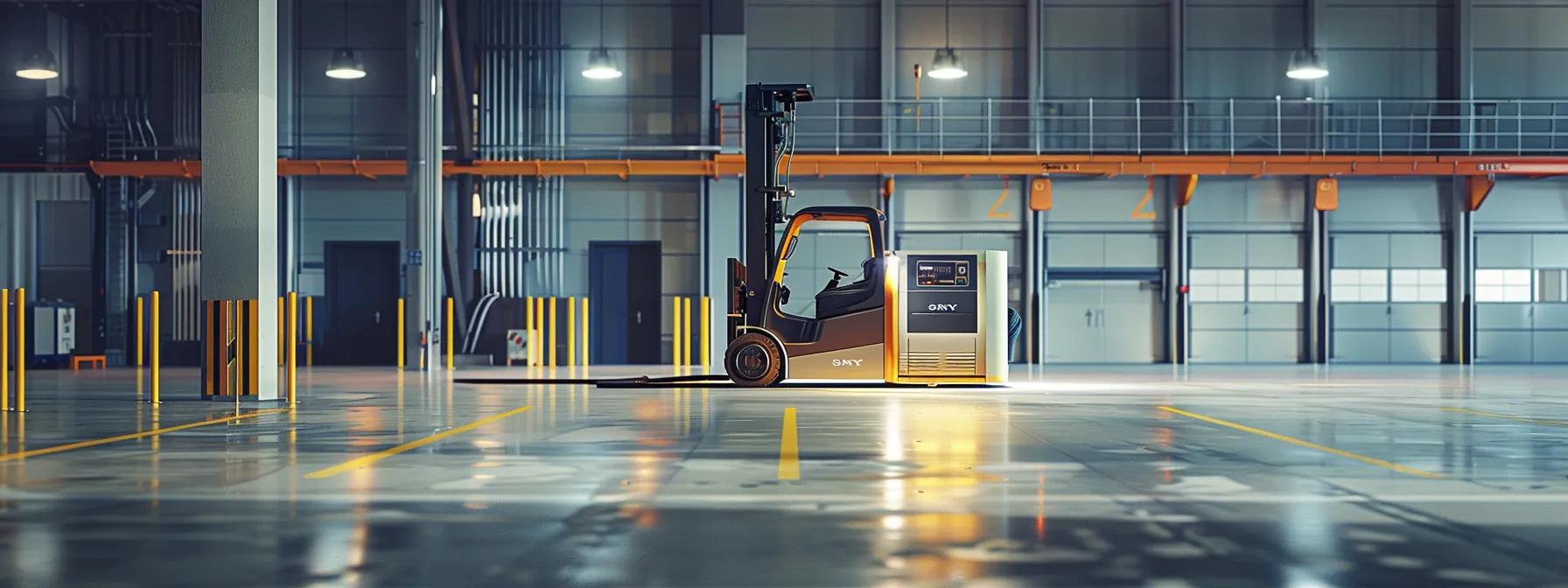
Choosing the right charging solution involves a careful evaluation of operational needs, budget, and environmental goals. Key considerations include:
– Total cost of ownership, factoring in energy consumption, battery lifespan, maintenance costs, and potential downtime.
– Compatibility with existing battery systems, whether lead-acid or lithium-ion.
– Customization options for fleet size, remote monitoring capabilities, and integration with renewable energy sources.
Professional installation and ongoing maintenance are also essential. Many suppliers offer comprehensive packages—including installation, maintenance, and system upgrades—that minimize disruptions and maximize return on investment.
What Factors Should Influence Your Charger Selection?
Several factors should guide your charger selection:
– Battery chemistry and capacity requirements.
– Availability and suitability of fast charging options.
– Local energy infrastructure and anticipated voltage drop issues.
– Safety features such as overcurrent protection and emergency shut-off mechanisms.
– Expected duty cycle, ambient operating conditions, and technical support availability.
A side-by-side comparison of different charging technologies can help clarify which model best meets your operational needs and budget constraints.
How Can Installation and Maintenance Services Impact Long-Term Performance?
Proper installation and regular maintenance are critical to the long-term performance of any charging solution. Professional installation ensures the system is integrated properly with your facility’s electrical systems, reducing hazards and optimizing performance. Routine inspections and firmware updates help prevent issues like voltage drops, overheating, and hardware malfunctions, ultimately extending battery life and minimizing unexpected downtime.
What Are Common FAQs About Forklift Battery Charging and Maintenance?
Addressing common questions can help both new and experienced operators manage their power solutions more effectively.
How Often Should Forklift Batteries Be Charged for Optimal Performance?
Forklift batteries should be charged at regular intervals—ideally before reaching critically low levels (around 30%–40% capacity). Regular charging prevents deep discharge cycles that degrade battery performance, while scheduled routines supported by battery management systems help maintain consistency and longevity.
Can You Mix Different Battery Types in a Forklift Fleet?
Mixing battery types within one fleet is not advisable due to differing charge cycles and maintenance requirements. Lithium-ion and lead-acid batteries require different charging profiles and operating conditions. Using the wrong charger can lead to reduced battery life, increased maintenance costs, and safety risks. Standardizing battery types or segregating charging processes is recommended.
What Safety Precautions Are Needed When Charging Forklift Batteries?
Safety is paramount. Operators should wear appropriate personal protective equipment (PPE) such as gloves and eye protection, especially when handling hazardous materials like sulfuric acid in lead-acid batteries. Ensure charging stations are well-ventilated to prevent gas buildup and that chargers include features like circuit breakers, fuses, and automatic shut-off mechanisms. Regular inspections and adherence to manufacturer guidelines further reduce risks.
Table: Comparative Overview of Charging Technologies and Benefits

This table shows that while traditional lead-acid chargers are cost-effective, lithium-ion and high-efficiency chargers offer superior performance in energy conservation and reduced downtime.
Following this analysis, it is clear that investing in advanced charging solutions can improve productivity and lower costs across your forklift fleet.
Final Thoughts
Swift Industrial Power’s comprehensive approach to forklift battery charging solutions enables businesses to achieve optimal efficiency without compromising safety or sustainability. Advanced chargers, particularly those using lithium-ion technology and high-efficiency management systems, help reduce downtime and extend battery life. Investing in the right charger not only boosts immediate performance but also provides long-term savings by protecting your critical assets. Adopting modern charging solutions is essential for maintaining a competitive edge and ensuring operational reliability.
Frequently Asked Questions
Q: How does regular maintenance impact forklift battery performance? A: Regular maintenance—including scheduled inspections and firmware updates—enhances battery longevity by preventing overheating and uneven charge distribution. It ensures consistent performance, reduces downtime, and lowers overall operational costs by addressing potential issues proactively.
Q: What are the primary safety concerns during forklift battery charging? A: Safety concerns include the proper handling of hazardous materials like sulfuric acid, ensuring proper ventilation, and using chargers with built-in overcurrent and thermal protection. Wearing PPE and following strict operational guidelines are essential to minimizing risks.
Q: Can fast charging systems compromise battery longevity over time? A: While fast charging reduces downtime, it may shorten battery life if not paired with sophisticated battery management systems. Modern fast chargers mitigate this risk by switching to maintenance modes and regulating voltage and current.
Q: How do I determine which charging solution is best suited for my forklift fleet? A: Consider factors such as battery chemistry, fleet size, required downtime, and energy consumption. Compare available features like remote monitoring, customization options, and safety protocols to determine the most cost-effective and efficient charger.
Q: Are there renewable energy options available for forklift charging stations? A: Yes, many modern charging stations integrate with renewable energy sources (e.g., solar panels). This integration reduces energy costs and supports sustainability goals by lowering your facility’s carbon footprint.
Q: What maintenance practices should be followed to optimize battery life? A: Optimal practices include regular charging at recommended levels, routine inspections for corrosion or imbalance, periodic equalization charges for lead-acid batteries, and using battery management systems for monitoring. Following manufacturer guidelines is crucial for maximizing performance and extending battery life.
Servicing Tennessee, Florida, and Alabama