
Essential Generator Types for Emergency Power Solutions
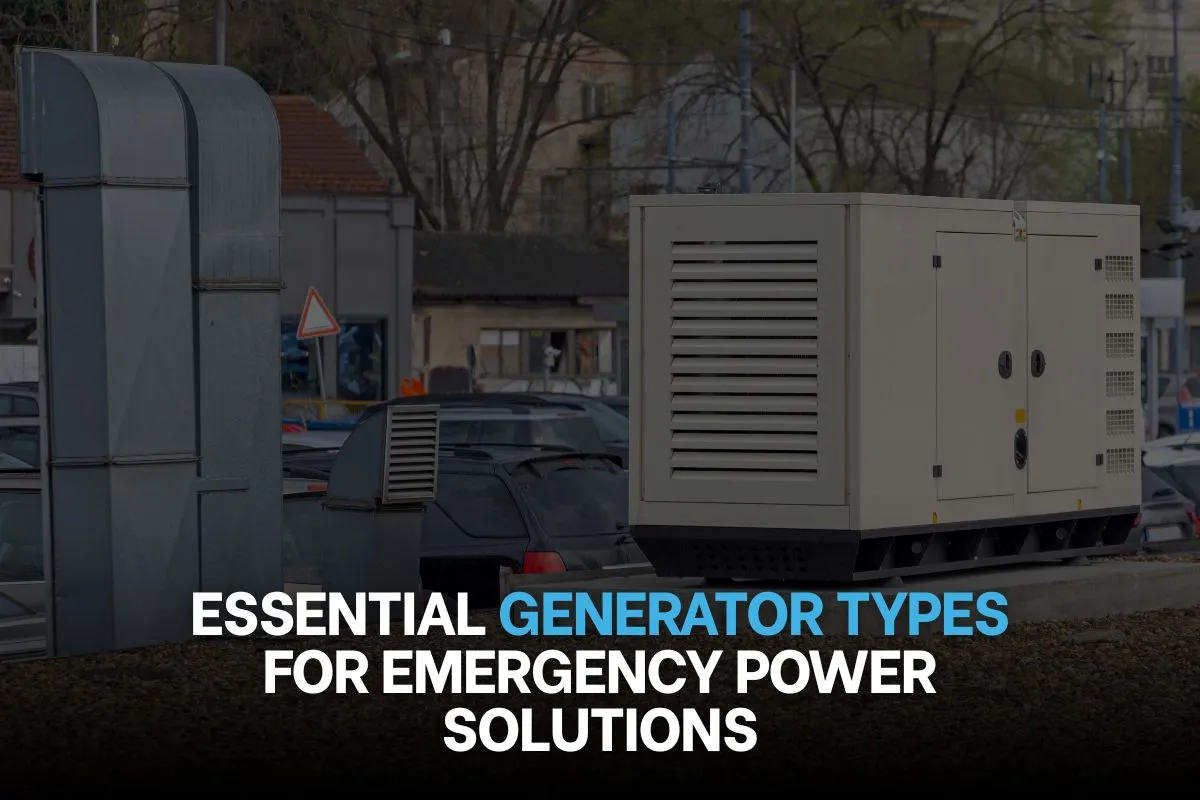
Essential Generator Types for Emergency Power: A Practical Guide for Commercial & Industrial Backup
Power interruptions are unpredictable, but your response shouldn’t be. This guide breaks down the generator options most commonly used in commercial and industrial settings, how they work, where they make the most sense, and what to weigh when choosing one. With clear comparisons and practical notes on performance, fuel, and key system components, the goal is to help facilities managers and decision-makers choose a backup solution that reduces downtime and protects operations.
What Are the Main Types of Commercial Emergency Generators?
Commercial emergency generators keep businesses running when the grid goes down. The most common types are standby, diesel, natural gas, and portable units. Each has distinct strengths and typical use cases; knowing those helps you match capacity and cost to critical needs.
- Standby Generators: Permanently installed units with automatic switching that start when utility power fails. They’re built for continuous protection of mission‑critical sites like hospitals, data centers, and manufacturing lines.
- Diesel Generators: Favored in heavy industrial environments for high power density, long runtimes, and rugged reliability. Diesel sets are efficient under large loads and are designed for prolonged service with proper maintenance.
- Natural Gas Generators: These units run cleaner than diesel and are often tied into an on‑site gas supply for extended runtime without fuel deliveries. They’re a strong choice for facilities focused on emissions, uptime, and lower onsite fuel handling.
- Portable Generators: Mobile and quick to deploy for temporary needs, construction sites, short-term outages, or small business backup. They provide flexibility but usually don’t match the endurance or automation of installed systems.
Knowing these core types makes it easier to narrow options and design a backup plan that fits both operational and budgetary goals.
How Do Standby Generators Provide Automatic Reliability?
Standby generators use an automatic transfer switch (ATS) to detect utility loss and bring the generator online, typically within 10 to 30 seconds. That short delay protects most critical systems and keeps essential loads powered until utility service is restored. For facilities where seconds matter, standby systems are engineered and tested to meet strict reliability and safety standards.
What Are the Benefits of Diesel Generators for Industrial Use?
Diesel generators are prized for fuel efficiency at heavy loads, robust construction, and long service life. They deliver high output in compact footprints and tolerate demanding operating conditions, which is why contractors, manufacturers, and large facilities commonly rely on them. With scheduled maintenance and fuel management, diesel sets can run for thousands of hours, offering a cost‑effective option for continuous or standby duty.
To put those operating characteristics in context, it helps to look at field data on diesel generator reliability.
How Do Natural Gas and Dual-Fuel Generators Enhance Emergency Power?
Natural gas and dual‑fuel generators increase operational flexibility and can reduce environmental impact. Dual‑fuel options let operators switch fuels as prices or supply conditions change, while dedicated natural gas sets simplify onsite fuel handling and cut particulate emissions compared with diesel.
- Natural Gas Generators: Run cleaner than diesel and integrate with utility or on‑site gas supplies for long runtimes without the logistics of liquid fuel delivery. They’re common in commercial buildings and facilities with sustainability goals.
- Dual-Fuel Generators: These systems can operate on both diesel and natural gas, offering fuel resilience when one source is scarce or expensive. That flexibility can lower operating costs and reduce risk during prolonged events.
For many organizations, the ability to choose or swap fuels during an emergency is a practical way to balance cost, availability, and emissions.
Why Choose Natural Gas Generators for Cleaner, Continuous Power?
Natural gas generators produce fewer greenhouse gases and particulates than diesel, helping sites meet regulatory limits and corporate sustainability targets. Because they can be connected to a continuous gas supply, they’re well-suited for facilities that need steady, long‑duration backup without frequent refueling.
What Advantages Do Dual-Fuel and Bi-Fuel Generators Offer?
Dual‑fuel and bi‑fuel generators give operators a hedge against fuel price swings and supply interruptions. When diesel costs spike or deliveries are constrained, switching to gas can keep systems running and cut fuel costs. That operational versatility makes these units a strategic choice for facilities that prioritize uptime and cost control.
Which Portable and Inverter Generators Suit Flexible Backup Needs?
Portable and inverter generators serve different needs: portability and convenience versus clean power for sensitive electronics. Choosing between them depends on how you plan to use the unit and which loads you need to protect.
- Portable Generators: Built for mobility and quick setup, portable units are ideal for temporary power at job sites, events, or as short‑term backup for small businesses. They’re a good match when you need power in multiple locations.
- Inverter Generators: Deliver stable, low‑distortion power that’s safe for laptops, monitoring equipment, and other sensitive devices. Inverter models are also quieter and more fuel‑efficient at light loads than conventional portable generators.
When Are Portable Generators Ideal for Temporary Power?
Portable generators are the go‑to when power needs are short-term or move from site to site. Their portability and straightforward setup make them useful for construction, outdoor events, and emergency tasks. For small businesses facing brief outages, a portable unit can restore essential circuits quickly, though it won’t replace a permanently installed standby system for long‑term resilience.
How Do Inverter Generators Support Sensitive Equipment?
Inverter generators regulate voltage and frequency electronically, producing clean sine‑wave power that prevents damage to computers, lab instruments, and medical gear. When protecting sensitive loads, an inverter is often better than a conventional portable generator, especially for extended operation in noise‑sensitive areas.
How to Size and Fuel Your Emergency Generator for Optimal Performance?
Correct sizing and fuel strategy are the foundation of a reliable backup system. Undersized units fail under load; oversized units add unnecessary cost. Fuel choice affects runtime, maintenance, and logistics. Start with a clear load assessment and factor in starting currents, duty cycle, and fuel availability.
- Key Considerations in Generator Sizing for Businesses: Evaluate total continuous load and peak starting loads, identify truly critical systems, and allow headroom for future growth. Accurate load lists and motor starting analysis prevent underspecification and unnecessary oversizing.
- Different Fuel Types Impact on Generator Operation and Maintenance: Fuel selection affects maintenance schedules, emissions controls, and supply logistics. Diesel requires fuel management and regular servicing; natural gas reduces onsite fuel handling but depends on gas infrastructure reliability.
What Are the Key Considerations in Generator Sizing for Businesses?
Sizing starts with a detailed inventory of essential equipment and its power needs, including momentary starting watts for motors and compressors. Consider the diversity of loads, redundancy requirements, and whether critical systems need continuous clean power. Work with engineers or service providers to run transient and step‑loading analysis so the selected set performs safely under real operating conditions.
For technical teams, a formal sizing study that includes motor starting and transient behavior is a practical next step.
How Do Different Fuel Types Impact Generator Operation and Maintenance?
Fuel choice changes maintenance demands and operational costs. Diesel systems need attention to fuel quality, filters, and regular oil changes; they also require storage and periodic turnover of fuel. Natural gas sets have fewer combustion residues and often lower routine maintenance, but they rely on a steady gas supply and may need different emission controls and monitoring. Match fuel to site logistics, expected runtime, and maintenance capabilities.
What Are the Essential Components of a Robust Emergency Power System?
A complete emergency power system pairs a generator with the right controls, fuel supply, and short‑term protection. Core components include an automatic transfer switch (ATS), adequate fuel storage, and an uninterruptible power supply (UPS) for sensitive or immediate loads.
- Automatic Transfer Switches: ATS units detect utility loss and switch critical loads to generator power automatically, minimizing downtime and operator intervention.
- Fuel Tanks: Properly sized and maintained fuel storage ensures the generator can run for the required durations. Consider refueling logistics, containment, and fuel conditioning when planning capacity.
- UPS Systems: UPS devices bridge the gap between power loss and generator start, protecting sensitive equipment from interruptions and voltage disturbances.
How Do Automatic Transfer Switches Ensure Seamless Power Transition?
The ATS monitors incoming utility power and, on loss, signals the generator to start. Once the generator is producing stable power, the ATS transfers selected loads to the generator output. When utility service returns and is stable, the ATS transfers loads back and shuts the generator down per programmed timing. Correct ATS selection and coordination are essential to avoid interruption or mis‑sequencing of critical loads.
Understanding the control logic and fail‑safe design of an ATS is key to reliable system behavior.
What Role Do UPS Systems Play in Emergency Power Protection?
UPS systems provide immediate, short‑duration power to critical loads while the generator starts and stabilizes. They prevent data loss, protect sensitive electronics from brownouts and spikes, and allow orderly shutdowns if needed. Integrating UPS with a generator and ATS control ensures smooth transitions and continuous protection for the most important equipment.
How Are Emergency Power Solutions Tailored for Specific Industries?
Industry requirements shape generator selection, redundancy, and maintenance strategy. Data centers and telecom facilities, for example, have different uptime targets and power quality needs than manufacturing plants or healthcare facilities.
- Data Center Generator Requirements for 100% Uptime: Data centers demand high redundancy, fast transfer times, and clean power. Solutions typically combine multiple generators, UPS arrays, and parallel controls to meet near‑continuous availability targets.
- Telecom Emergency Power Systems: Telecom sites need reliable backup for network continuity and often use hybrid approaches, such as batteries, generators, and fuel flexibility, to keep communications online during prolonged outages.
What Are Data Center Generator Requirements for 100% Uptime?
To approach continuous availability, data centers use redundant generator capacity, automatic start and transfer systems, and power conditioning. Generators must be sized for peak demand and tested under load, with maintenance programs and fuel strategies that prevent unexpected gaps in protection.
How Do Telecom Emergency Power Systems Keep Networks Connected?
Telecom sites combine on‑site power generation, battery systems, and remote monitoring to maintain connectivity. Systems are designed for long dwell times between service visits, fuel resilience, and rapid automatic recovery to preserve network uptime during extended grid outages.
Frequently Asked Questions
What factors should businesses consider when selecting an emergency generator?
Select a generator based on critical load, expected runtime, fuel availability, required redundancy, and site constraints. Perform a load assessment, consider motor starting currents, factor in future growth, and evaluate the total cost of ownership, including maintenance and fuel logistics.
How can businesses ensure their emergency power systems are compliant with regulations?
Follow local and national electrical, fuel, and emissions codes for installation and operation. Maintain documentation, schedule required inspections, and work with certified installers. Regular testing and maintenance records also support compliance and demonstrate operational readiness.
What maintenance practices are essential for keeping generators in optimal condition?
Establish a preventative maintenance plan that includes periodic inspections, oil and filter changes, battery tests, coolant checks, and fuel‑quality management. Run scheduled load tests and keep detailed service records to detect issues early and extend equipment life.
How do businesses determine the right size for their emergency generator?
Perform a comprehensive load analysis that lists all essential equipment, continuous and starting wattages, and any future expansion. Use that data to size the generator with appropriate reserve capacity and confirm selections with transient and motor starting studies.
What are the advantages of using inverter generators over traditional generators?
Inverter generators produce low‑distortion power safe for sensitive electronics, run quieter, and offer better fuel efficiency at light loads. They’re ideal for small‑scale applications, remote work sites, and any situation where power quality and noise matter.
What role do fuel tanks play in emergency power systems?
Fuel tanks provide the on-site supply that determines how long a generator can run without resupply. Right‑sized, well‑maintained tanks and proper fuel conditioning reduce the risk of contamination and ensure reliable operation during extended outages.
How can businesses enhance the resilience of their emergency power solutions?
Build redundancy into your design (multiple generators or parallel systems), integrate UPS for sensitive loads, maintain a rigorous testing and maintenance schedule, and create contingency plans for fuel and service disruptions. Regular risk assessments help prioritize investments that improve uptime.
Conclusion
Choosing the right emergency power strategy protects operations, limits financial risk, and supports safety and compliance. Whether you need automatic standby protection, heavy‑duty diesel endurance, cleaner natural gas options, or portable flexibility, match the generator type to your critical loads, fuel logistics, and maintenance capability. For businesses seeking expert guidance, Swift Industrial Power offers comprehensive support, from system assessment and sizing to installation and ongoing maintenance, ensuring reliable backup power when it matters most.
Servicing Tennessee, Florida, and Alabama