Find Reliable Forklift Battery Maintenance Services Nearby
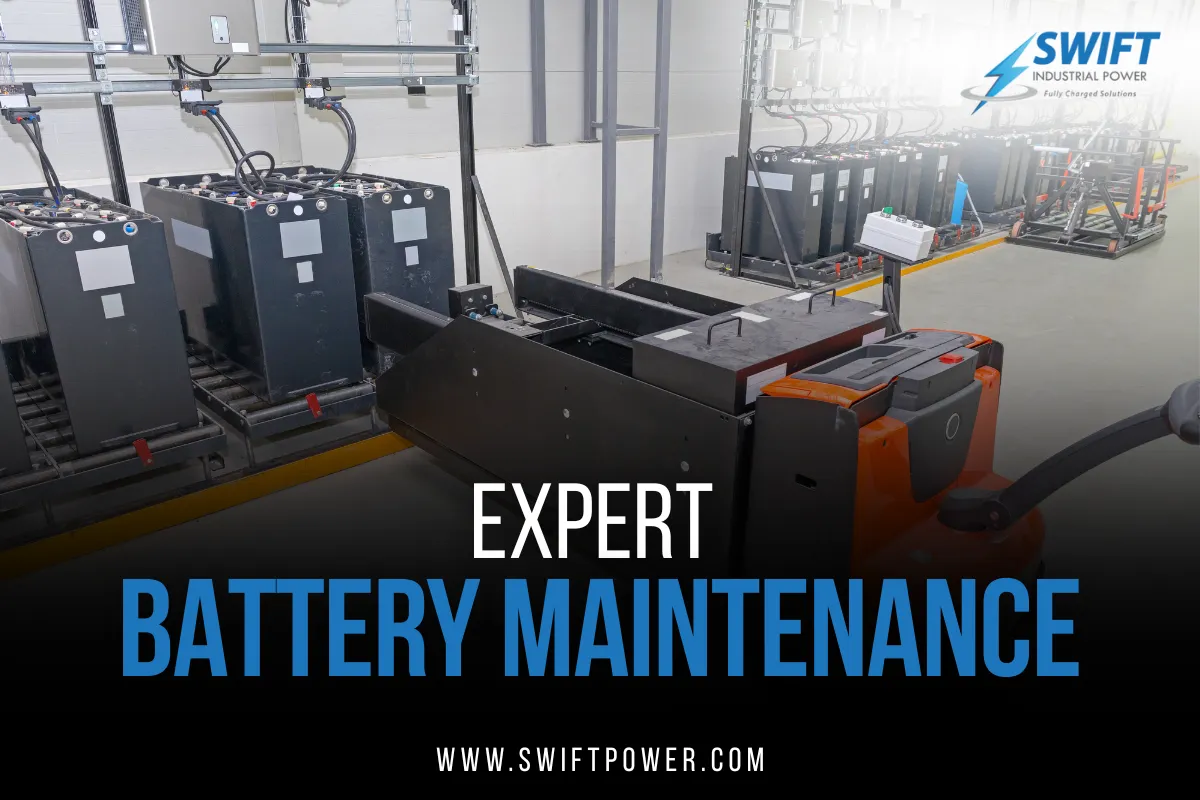
Keep Your Forklifts Running Strong: Expert Battery Maintenance Services Near You
Downtime from forklift battery issues can disrupt your warehouse, slashing productivity and inflating costs. Choosing local maintenance experts, like Swift Industrial Power, keeps your fleet running smoothly with reliable power and enhanced safety. Proper battery handling systems minimizes breakdowns, extends service life, and ensures a safer work environment.
This guide details why proactive maintenance matters, outlines top local services, and shares best practices for battery upkeep. You’ll discover how to select skilled professionals, understand maintenance needs for different battery types, address common issues, manage service costs, and identify industries that thrive with dependable battery care.
Why Is Keeping Your Forklift Batteries in Top Shape Crucial for Your Business?
Consistent forklift battery maintenance involves regularly checking and caring for your motive-power cells to maintain their capacity, prevent failures, and ensure workplace safety. By tackling issues like acid stratification, watering, corrosion, and uneven charging, you can avoid costly operational halts and extend the life of your equipment think of it: a well-maintained battery fleet can keep going strong for over five years without a hitch.
Battery Maintenance and Workplace Safety
Regular check-ups, including inspections, watering, cleaning, and proper charging routines, are vital for maximizing forklift battery lifespan and ensuring safe operations. These steps help prevent corrosion, keep electrolyte levels just right, and steer clear of battery problems.
This underscores the importance of consistent upkeep for your forklift batteries.
How Does Proactive Battery Maintenance Slash Operational Downtime?
When your batteries are consistently maintained, they hold their charge better and deliver predictable power, preventing sudden stops in your warehouse operations.
- Weekly checks of water levels stop electrolyte imbalances that lead to reduced capacity.
- Monthly cleaning of terminals clears away corrosion that can block electrical flow.
- Regular equalization charges help break down sulfate crystals, restoring full voltage.
These actions work together to keep your operations running without interruption, cutting down on emergency replacements and keeping your material handling on track.
What Safety and Compliance Perks Come with Professional Battery Care?
Professional battery service ensures you’re meeting regulations, protecting your staff, and handling environmental responsibilities by managing acid, ventilation, and waste disposal correctly. Certified technicians adhere to OSHA (The Occupational Safety and Health Administration) standards for refilling electrolytes, follow EPA guidelines for hazardous waste, and use the right protective gear during service. This systematic approach prevents workplace accidents and fines while fostering a strong safety culture throughout your facility.
OSHA’s Rules for Battery Charging and Swapping
OSHA requires that battery charging and changing happen in designated zones by trained staff. These areas need good ventilation and safety gear to shield workers from risks like explosions and chemical exposure, including battery handling systems.
This highlights the critical safety and compliance advantages of professional battery maintenance.
How Does Proper Maintenance Extend the Life of Your Forklift Batteries?
Preventative maintenance balances the voltage across each cell and removes damaging lead sulfate buildup, which can boost the battery’s cycle life. These longevity improvements significantly lower your total cost of ownership and delay the need for complete forklift battery repair.
What Forklift Battery Maintenance Services Can You Find Locally?
Local service providers deliver a wide array of specialized solutions designed to keep your forklift battery fleet operating at peak performance, tailored to meet the unique demands of your business. These services encompass routine maintenance plans, in-depth diagnostics, in-shop reconditioning, and urgent on-site repairs, ensuring minimal disruption to your operations. Whether you require regular check-ups to prevent issues, comprehensive reconditioning to restore aging batteries, or rapid-response emergency assistance to address unexpected failures, skilled technicians are equipped to maintain compliance with safety and environmental regulations while keeping your fleet powered.
What Does Preventative Maintenance Entail for Forklift Batteries?
Preventative maintenance includes essential tasks designed to head off problems before they arise:
- Battery Watering: topping up with distilled water to maintain the correct fluid levels.
- Battery Washing and Cleaning: Removing acidic residue and corrosion from cell posts and connectors.
- Voltage Equalization Charging: Applying a controlled overcharge to break down sulfate crystals.
These fundamental services help preserve battery capacity, protect against unexpected failures, and lay the groundwork for more in-depth diagnostics.
How Are Forklift Battery Repairs and Diagnostics Carried Out?
Technicians use a combination of visual, electrical, and chemical assessments, along with targeted repairs, to restore battery health:
- Cell Replacement: swapping out damaged cells to bring the full pack voltage back to normal.
- Charger Repair and Calibration: Identifying charger issues and ensuring charge cycles are accurate.
- Sulfation Removal: Using pulse currents or special agents to break down lead sulfate deposits.
Each step focuses on pinpointing the root cause, fixing the problem, and confirming restored performance before the batteries go back into service.
What Emergency Forklift Battery Services Are Available in Your Area?
When unexpected issues pop up, rapid-response teams are ready to provide on-site solutions to minimize any disruption to your operations:
- 24/7 On-Site Repair dispatching mobile units equipped with replacement cells and chargers.
- Acid Spill Cleanup and Hazardous Waste Disposal neutralizing spills and managing contaminated materials according to environmental regulations.
EPA Guidelines for Lithium-Ion Battery Disposal
The EPA classifies most lithium-ion batteries as hazardous waste due to their flammability and reactivity. Proper disposal and recycling are crucial to prevent environmental contamination and ensure battery handling systems.
Swift Industrial Power intervention helps keep your operations running and prevents further damage from leaks or dead batteries.
How Do You Select the Best Forklift Battery Service Company Nearby?
Choosing the right forklift battery maintenance service provider ensures smooth operations, longer battery life, and reduced downtime. Here are the key factors to look for:
- Certified technicians skilled in battery diagnostics, repair, and maintenance (both lead-acid and lithium-ion).
- Strong safety practices with OSHA/EPA compliance, safety audits, and strict PPE policies.
- Flexible services such as onsite repair and customized maintenance plans.
- Proven track record supported by client testimonials and case studies.
- Rapid response to minimize downtime and disruptions.
- Focus on efficiency to extend battery life, ensure fleet performance, and reduce costs.
What Credentials and Skills Should Forklift Battery Technicians Possess?
Technicians should be certified in industrial battery maintenance, electrical safety, and handling hazardous materials. They need to be skilled in:
- Specific gravity and voltage testing
- Equalization charge procedures
- Battery and charger diagnostics
These qualifications ensure that the maintenance performed meets industry standards and delivers dependable results.
How Do Service Companies Guarantee Safety and Compliance?
Trusted providers use documented safety management systems, including regular audits, strict PPE policies, and compliance checklists for OSHA and EPA standards. They conduct site risk assessments before each service call, reinforcing safe practices during material handling, cleaning, and repair work.
What Are the Advantages of Onsite Forklift Battery Repair Services?
Mobile repair units bring full diagnostic and repair capabilities directly to your facility, which:
- Eliminates shipping delays and the downtime that comes with them
- Provides on-demand cell replacement and charger calibration
- Offers quick response for acid spills and waste management
This convenience speeds up the resolution of battery problems and keeps your material handling moving without interruption.
How Do Different Forklift Battery Types Affect Maintenance Needs and Costs?
Lead-acid and lithium-ion forklift batteries, due to their distinct chemical compositions, come with varying maintenance demands and cost implications that directly influence service strategies and operational budgets. Lead-acid batteries, being more cost-effective upfront, require more frequent and hands-on maintenance to sustain performance, often involving regular checks and interventions that add to labor and service expenses, typically $200–$300 per quarter.
Lithium-ion batteries, while pricier initially, demand less frequent servicing, often biannual visits costing $150–$250—thanks to their integrated battery management systems that streamline upkeep. The trade-off lies in their longevity and efficiency: lithium-ion batteries support faster charging and extended cycle life. By aligning maintenance plans with the specific battery type, businesses can optimize fleet reliability, balance operational expenses, and enhance overall productivity.
What Are the Maintenance Differences Between Lead-Acid and Lithium-Ion Batteries?
Here’s a look at how their maintenance frequency, typical costs, and service considerations compare:
Caring for Lead-Acid Batteries
Regular maintenance, including checking electrolyte levels, cleaning terminals, and preventing sulfation, can significantly extend the life of lead-acid batteries. Using proper charging methods is also key to avoiding premature battery failure.
This reinforces the importance of proper upkeep for extending forklift battery lifespan.
How Does a Battery Management System (BMS) Enhance Battery Performance?
A BMS continuously monitors voltage, temperature, and charge status, automatically balancing cells and flagging any issues before they become serious. This real-time oversight boosts energy efficiency by up to 18 percent and prevents overcharging or thermal runaway events.
How Does Temperature Affect Forklift Battery Lifespan and Maintenance Requirements?
Higher ambient temperatures speed up chemical reactions, reducing cycle life by about 50 percent for every 15°F above 77°F. Managing temperature through climate-controlled storage or active cooling during service visits helps maintain capacity and reduces how often maintenance is needed.
What Are Common Forklift Battery Issues and How Are They Resolved?
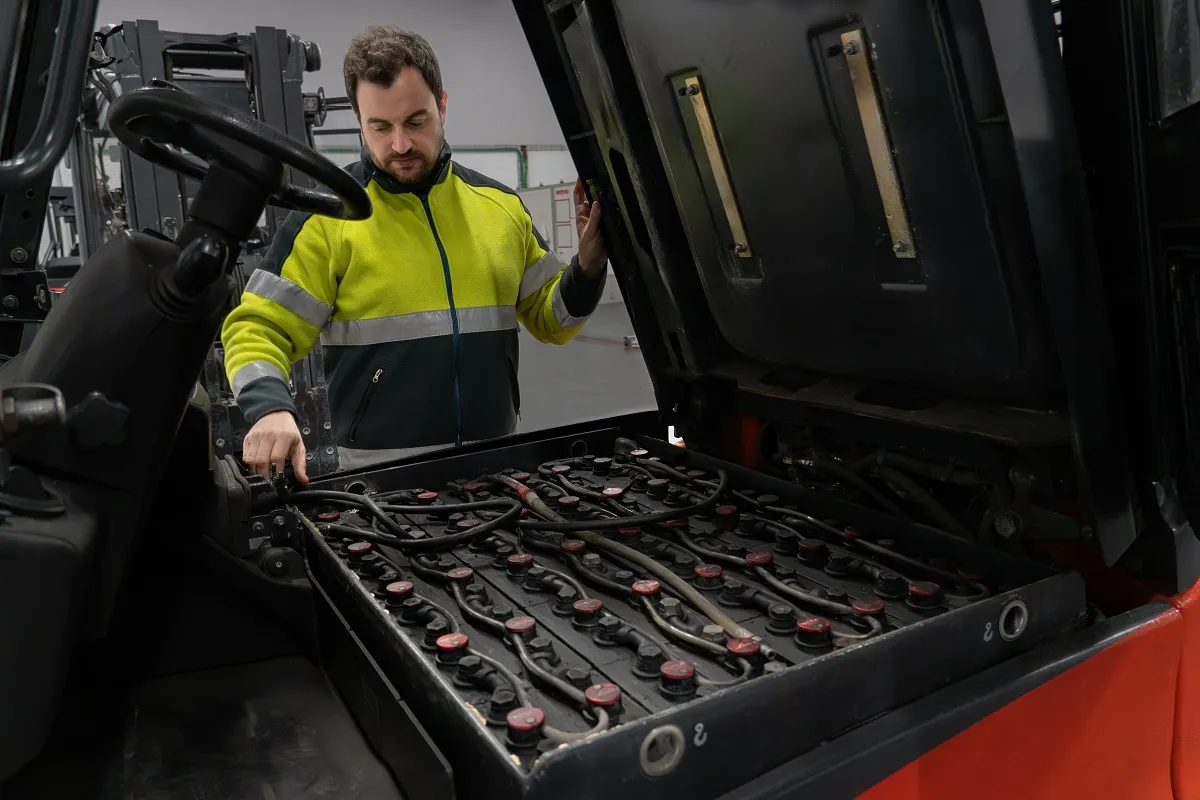
Forklift batteries often face challenges like sulfation, corrosion, and low electrolyte levels, which can hinder performance and lead to operational disruptions. Recognizing and addressing these issues promptly through targeted solutions is critical to restoring reliable battery function and minimizing costly downtime. These battery problems, if left unchecked, can reduce efficiency, increase maintenance costs, and even pose safety risks. By leveraging routine inspections and professional services, businesses can tackle these common issues effectively to ensure consistent power output and prolong battery life.
Key issues and their resolutions include:
1. Sulfation: Hardened lead sulfate crystals form due to undercharging or prolonged inactivity, reducing capacity; resolved with specialized charging techniques or chemical treatments.
2. Corrosion: Acid vapors react with metal surfaces, impairing electrical flow; mitigated by regular cleaning and applying protective coatings.
3. Low Electrolyte Levels: Evaporation or overcharging depletes fluid, affecting performance; corrected by topping up with distilled water to maintain proper levels.
Implementing these solutions through proactive maintenance and expert intervention supports uninterrupted material handling and enhances overall fleet reliability.
What Causes Battery Sulfation and How Is It Addressed?
Sulfation happens when lead sulfate crystals harden on the battery plates due to undercharging or long periods of inactivity. Treatment involves:
- Equalization charging to dissolve the crystals
- Using chemical desulfation additives to break down the buildup
These methods help recover lost capacity and extend the battery’s cycle life.
How Is Corrosion Prevented and Removed During Maintenance?
Corrosion forms when acid vapors react with metal surfaces and is managed by:
- Regular washing with neutralizing solutions
- Applying protective coatings to terminals
- Ensuring cable connections are clean and tight
Effective corrosion control protects electrical conductivity and prevents voltage drops.
How Are Electrolyte Levels Checked and Maintained?
Technicians use hydrometers to measure specific gravity and ensure the fluid is at the manufacturer’s recommended levels. They replace any lost distilled water and confirm the correct acid concentration, which keeps ionic conductivity optimal and ensures safe operation.
What Are the Standard Costs for Preventative Maintenance and Repairs?
Here’s a breakdown of common service rates:
How Does Regular Maintenance Save Money Compared to Replacing Batteries?
Investing in routine care can extend battery life by 30–50 percent, helping you avoid full pack replacements that can cost $2,500–$6,500. Proactive maintenance reduces capital expenses and prevents costly downtime from unexpected failures.
Are Battery Rental or Leasing Options Available Locally?
Many providers offer rental or leasing programs to ensure continuous operation without requiring large upfront investments. Flexible agreements can include scheduled battery swaps, maintenance, and 24/7 emergency support all managed with predictable monthly payments.
Which Industries Benefit Most from Local Forklift Battery Maintenance Services?
Consistent forklift battery maintenance is vital for a variety of industries, ensuring reliable power delivery for critical operations such as material handling, warehousing, manufacturing, and logistics. By addressing issues like capacity loss, corrosion, and charging inefficiencies, local maintenance services help prevent costly downtime and enhance operational safety across diverse sectors. These services are tailored to meet the specific needs of each industry, supporting seamless workflows and compliance with regulatory standards.
Key sectors that gain significantly from proactive battery care include:
1. Material Handling and Logistics: Dependable battery performance ensures smooth pallet movement and dock operations, minimizing shipment delays and boosting warehouse efficiency.
2. Warehousing and Manufacturing: Ensures that goods get to market on time. No loss in the ability to move equipment where it needs to go onsite or distributing offsite.
How Does Battery Maintenance Support Material Handling and Logistics Operations?
Well-maintained batteries provide reliable lift-truck performance, enabling efficient movement of pallets and smooth dock operations. Fleet managers depend on planned maintenance schedules to plan workloads and prevent shipment delays.
Local forklift battery services offer tangible cost savings, improved safety, and extended battery lifecycles. By choosing qualified technicians, customizing service plans to your specific battery types, and utilizing local emergency support, you can maintain peak operational performance and minimize costly downtime. Contact local experts today to secure dependable power solutions and maximize your fleet’s productivity.
Final Thoughts
Local forklift battery services deliver substantial cost savings, improved workplace safety, and extended battery lifespans, keeping your operations running smoothly. By partnering with Swift Industrial Power’s skilled technicians and customizing service plans to your specific operational needs, you can optimize forklift performance, minimize costly downtime, and ensure compliance with industry standards. Don’t let battery issues disrupt your productivity. Take control of your fleet’s reliability today.
Contact Swift Industrial Power or request a quote now to schedule expert maintenance or a consultation tailored to your business. Maximize your operational efficiency, secure dependable power solutions, and keep your fleet at peak performance with our trusted local services.
Servicing Tennessee, Florida, and Alabama