
Natural Gas Generators vs Diesel: What You Need to Know
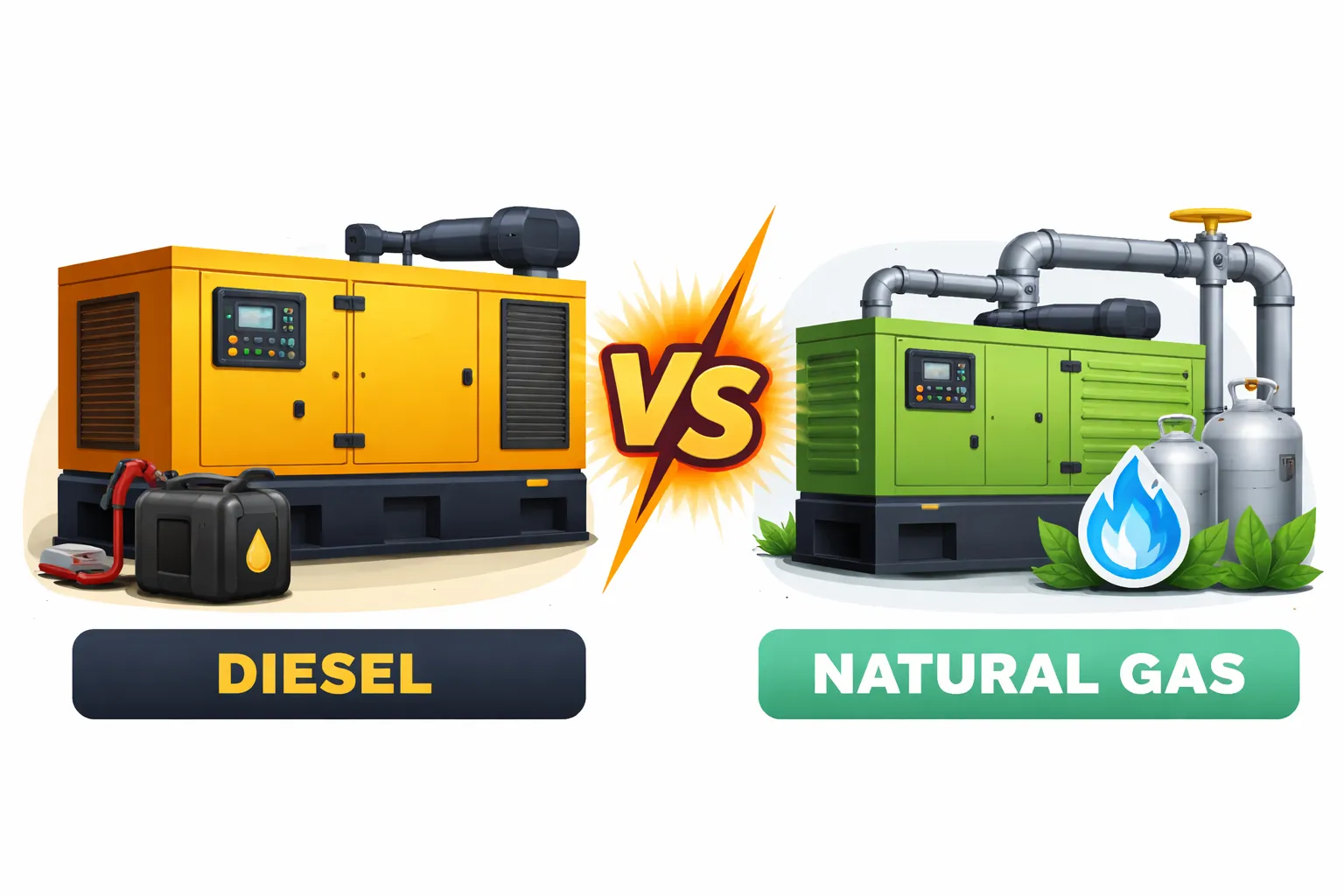
Natural Gas Generators vs Diesel: Essential Insights for Informed Power Solutions
Selecting the right generator system requires more than a simple cost comparison. Fuel type influences performance, compliance, maintenance, and long-term operational efficiency. This guide examines the key differences between natural gas and diesel generators, helping businesses make informed, strategic power decisions while considering future integration with renewable energy systems.
Key Differences Between Diesel and Natural Gas Generators
Diesel and natural gas generators vary in fuel type, emissions, efficiency, and maintenance requirements. Diesel systems are known for reliability, durability, and heavy-load performance, while natural gas generators offer cleaner operation, lower emissions, and reduced maintenance. The table below summarizes the primary differences for quick reference:
Advantages and Disadvantages
Choosing the right generator requires weighing the benefits and limitations of each fuel type against your site’s operational needs, infrastructure, and long-term costs.
Natural Gas Generators
- Advantages:
- Lower emissions and cleaner combustion
- Often, it is more fuel-efficient with lower operating costs
- Quieter operation, ideal for urban or noise-sensitive sites
- Disadvantages:
- Dependence on pipeline infrastructure
- Higher upfront installation costs in some cases
- Lower emissions and cleaner combustion
- Often, it is more fuel-efficient with lower operating costs
- Quieter operation, ideal for urban or noise-sensitive sites
- Dependence on pipeline infrastructure
- Higher upfront installation costs in some cases
Diesel Generators
- Advantages:
- High reliability and rugged performance
- Wide fuel availability and easy storage
- Disadvantages:
- Higher emissions (CO₂, NOx, particulates)
- More frequent maintenance due to soot and filter buildup
- High reliability and rugged performance
- Wide fuel availability and easy storage
- Higher emissions (CO₂, NOx, particulates)
- More frequent maintenance due to soot and filter buildup
For businesses seeking the best solution for their facility, consult Swift Industrial Power, Inc., We help evaluate site requirements, recommend the ideal generator type, and ensure compliance with operational and environmental standards.
Important Considerations for Selection
Base your choice on load profile, fuel access, emissions rules, and total cost of ownership (installation, maintenance, and fuel). Local regulations can limit diesel use in some areas, so confirm compliance before deciding.
Research underscores the complexity of generator procurement and recommends a multi‑criteria approach that balances cost, reliability, and other operational factors.
What Are the Key Benefits of Natural Gas Generators?
Natural gas units are favored for lower emissions, improved fuel efficiency, and reduced routine maintenance compared with diesel engines.
- Cost Efficiency: Often lower operating cost than diesel.
- Environmental Impact: Significantly reduced emissions and particulates.
- Operational Advantages: Less soot means fewer maintenance intervals.
How Do Natural Gas Generators Enhance Fuel Efficiency and Cost Savings?
Natural gas generators achieve higher fuel efficiency through cleaner combustion, which allows more energy from each unit of fuel to be converted into electricity. This reduces overall fuel consumption and lowers operating costs compared with diesel systems running at similar loads. Additionally, the stability of natural gas supply protects businesses from fuel price volatility, making long-term budgeting more predictable.
By running efficiently and requiring less frequent maintenance, natural gas generators also reduce downtime and associated labor costs, contributing to a lower total cost of ownership over the system’s lifecycle.
What Environmental Advantages Do Natural Gas Generators Offer Compared to Diesel?
Natural gas generators produce significantly lower emissions than diesel units, making them a cleaner choice for businesses concerned with environmental impact and regulatory compliance. They emit less carbon dioxide (CO₂), nitrogen oxides (NOx), and particulate matter, reducing air pollution and helping facilities meet local and national emissions standards.
Cleaner combustion also means less soot and residue, which lowers maintenance demands and minimizes the environmental footprint over the generator’s lifecycle. When paired with renewable energy or hybrid systems, natural gas generators further reduce fuel use and greenhouse gas emissions, supporting sustainability goals without compromising reliability.
What Are the Common Disadvantages of Diesel Generators?
While diesel generators are highly reliable and suitable for heavy-duty applications, they come with several notable drawbacks:
- Higher Emissions: Diesel engines emit more carbon dioxide (CO₂), nitrogen oxides (NOx), and particulate matter, complicating regulatory compliance in areas with strict air-quality standards.
- Increased Maintenance Requirements: Soot, fuel residue, and filter buildup require regular servicing to maintain performance and prevent damage, increasing downtime and labor costs.
- Noise Levels: Diesel generators are generally louder than natural gas systems, which may necessitate soundproofing or enclosures in noise-sensitive environments.
- Fuel Cost Volatility: Diesel prices can fluctuate, potentially impacting long-term operating budgets.
- Environmental Concerns: Higher emissions and fuel handling considerations make diesel less environmentally friendly compared with cleaner alternatives like natural gas or hybrid systems.
How Do Diesel Generators Impact Emissions and Environmental Compliance?
Diesel generators are reliable and powerful, but they produce higher levels of carbon dioxide (CO₂), nitrogen oxides (NOx), and particulate matter compared with cleaner fuel alternatives. These emissions can complicate compliance with local, state, or national air-quality regulations, especially in urban or environmentally sensitive areas.
Facilities using diesel generators may need to implement additional measures, such as exhaust treatment systems, selective catalytic reduction, or particulate filters, to meet regulatory standards. Regular monitoring, reporting, and adherence to maintenance schedules are also essential to ensure ongoing compliance.
Understanding the emissions profile of diesel systems is critical for businesses planning long-term operations, permitting, and sustainability strategies.
What Are the Maintenance and Operational Challenges of Diesel Generators?
Diesel generators are robust and reliable, but they require diligent maintenance and careful operational management to ensure optimal performance:
- Frequent Servicing: Frequent Servicing: Regular oil changes, filter replacements, fuel system checks, and soot management are necessary to prevent engine wear and maintain efficiency. For businesses that want to reduce downtime and ensure consistent performance, professional reserve power service and maintenance support can play a critical role.
- Soot and Residue Buildup: Diesel combustion produces particulates that can accumulate in the engine and exhaust system, increasing the risk of damage if not properly managed.
- Fuel Quality and Storage: Diesel must be stored correctly to avoid contamination or degradation, which can affect generator performance.
- Noise and Vibration: Diesel units tend to be louder and produce more vibration than natural gas systems, requiring soundproofing or isolation in noise-sensitive environments.
- Operational Costs: Maintenance, fuel, and potential downtime contribute to higher total operating expenses compared with cleaner, lower-maintenance alternatives.
- Cold Weather Considerations: Diesel can gel in low temperatures, requiring pre-heaters or additives to maintain reliability.
How Do Installation and Maintenance Costs Compare Between Natural Gas and Diesel Generators?
The cost profile of diesel and natural gas generators differs in both upfront investment and ongoing maintenance:
- Installation Costs: Diesel generators often have lower initial installation costs since they require minimal fuel infrastructure and are widely available. Natural gas systems may involve higher upfront expenses due to pipeline connections or gas storage setup.
- Maintenance Costs: Diesel generators require more frequent servicing to manage soot, filters, and other wear from heavier combustion, which increases labor and downtime. Natural gas generators produce less residue, resulting in fewer maintenance intervals and lower long-term upkeep costs.
- Total Cost of Ownership: While diesel may be cheaper to install, its higher operational and maintenance expenses can make total ownership more costly over time. Conversely, natural gas generators may cost more upfront but often deliver savings in fuel efficiency, maintenance, and regulatory compliance.
How Does Ongoing Maintenance Differ Between Natural Gas and Diesel Systems?
Natural gas and diesel generators require different approaches to ongoing maintenance due to their fuel characteristics and combustion processes:
- Diesel Generators: Diesel engines produce soot and particulates during operation, necessitating frequent oil changes, filter replacements, and exhaust system cleaning. Regular inspection of fuel lines, injectors, and cooling systems is also critical to maintain reliability, especially under heavy-duty or extended use.
- Natural Gas Generators: Natural gas combustion is cleaner, resulting in less residue and fewer maintenance demands. Oil and filter changes are still required, but intervals are typically longer, and exhaust system servicing is minimal. This reduces labor, downtime, and long-term operating costs.
How Can Renewable Energy Integration Enhance Generator Solutions?
Integrating renewable energy with generator systems can improve efficiency, reduce fuel consumption, and lower emissions while maintaining reliable backup power:
- Reduced Fuel Use: Solar panels, wind turbines, or battery storage can supply supplemental power, allowing generators to run less frequently and for shorter durations.
- Lower Emissions: By decreasing generator runtime, renewable integration reduces greenhouse gas and particulate emissions, supporting sustainability goals.
- Improved System Longevity: Less frequent operation reduces wear and maintenance requirements, extending the life of the generator.
- Energy Flexibility and Resilience: Hybrid systems can balance multiple power sources, ensuring critical loads remain supported even during prolonged outages or fuel supply disruptions.
- Cost Savings: Reduced fuel consumption and maintenance can result in lower operational expenses over time, improving the total cost of ownership.
What Renewable Energy Options Complement Natural Gas Generators?
Common complementary sources include:
- Solar Energy: Panels supply supplemental power and cut generator run time.
- Wind Energy: Turbines can offset peak demand periods.
- Battery Storage: Stores energy for backup and reduces generator cycling.
These options improve performance and lower carbon footprint when integrated correctly.
How Does Expert Consultation Support Tailored Renewable Energy Installations?
Professionals perform site assessments, match systems to load and regulatory constraints, and design solutions that meet performance and cost targets.
The table summarizes operational differences and highlights natural gas advantages in efficiency and emissions.
Frequently Asked Questions
What factors should I consider when choosing between natural gas and diesel generators?
Consider load, fuel availability, emissions rules, and total cost of ownership (installation, fuel, and maintenance). Verify local infrastructure and permitting constraints.
How do natural gas and diesel generators perform in extreme weather conditions?
Both work in extremes with proper preparation: diesel performs well in cold but needs anti‑gel measures; natural gas may require freeze protection and specific site details.
What are the safety considerations for using natural gas and diesel generators?
Ensure ventilation, routine maintenance, and code compliance. Prevent gas leaks, route exhaust safely, and install carbon monoxide detectors when generators operate near occupied spaces.
Can natural gas generators be used in off-grid applications?
Only when a reliable gas supply exists; otherwise, diesel or renewables with storage are more practical for true off‑grid sites.
What is the lifespan of natural gas and diesel generators?
Lifespan depends on usage and care; natural gas units commonly last around a decade or more with maintenance, while diesel units can last longer under heavy-duty service when well maintained.
How do noise levels compare between natural gas and diesel generators?
Natural gas generators are typically quieter. Diesel units are louder under load; review model sound ratings and consider enclosures or soundproofing if noise is a concern.
Conclusion
Selecting between natural gas and diesel requires balancing emissions, cost, and operational needs. Natural gas often offers lower emissions and reduced maintenance; diesel provides robustness and fuel availability. Evaluate site requirements, regulatory constraints, and lifecycle costs to choose the best solution, and consult specialists for project-specific guidance.
Servicing Tennessee, Florida, and Alabama